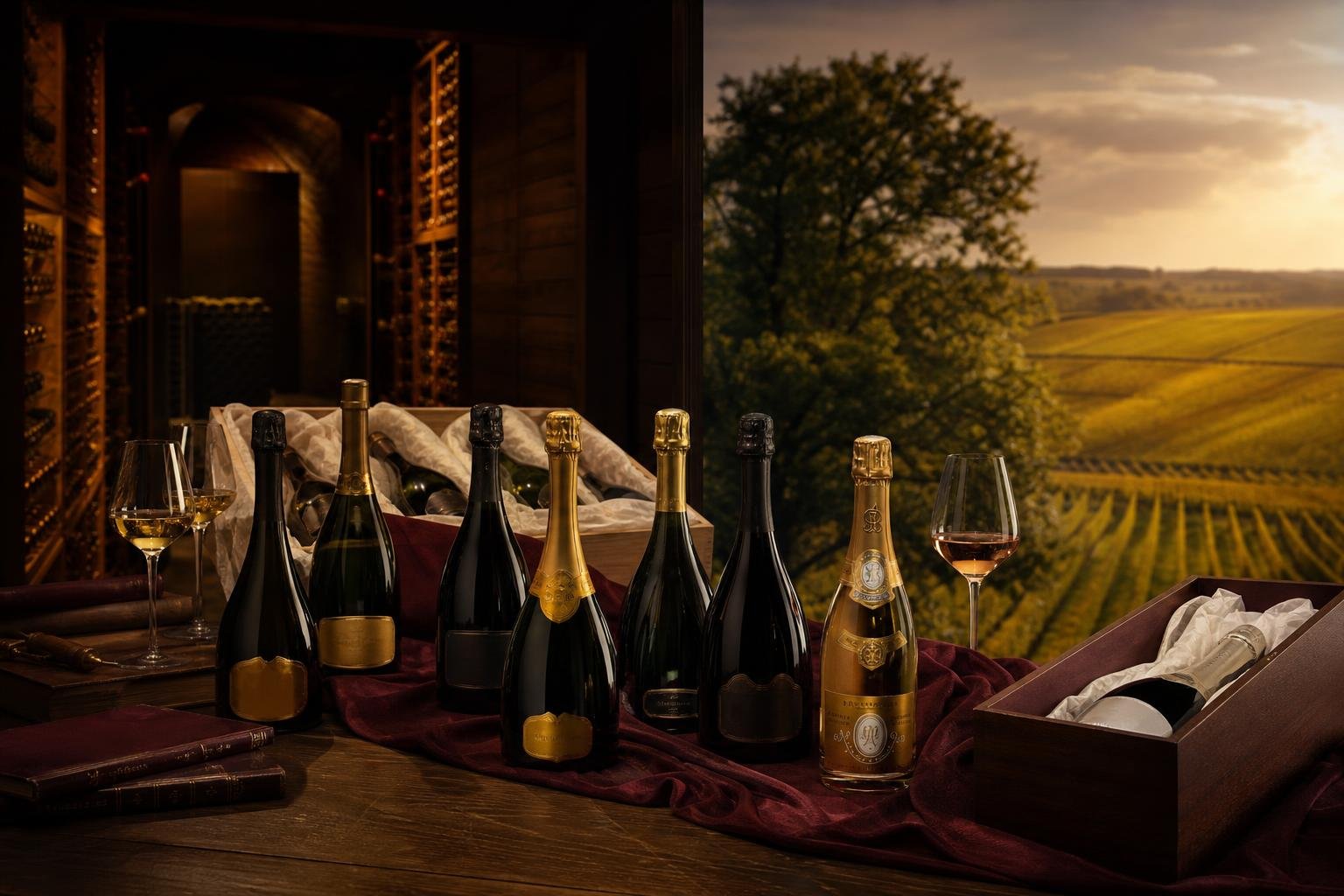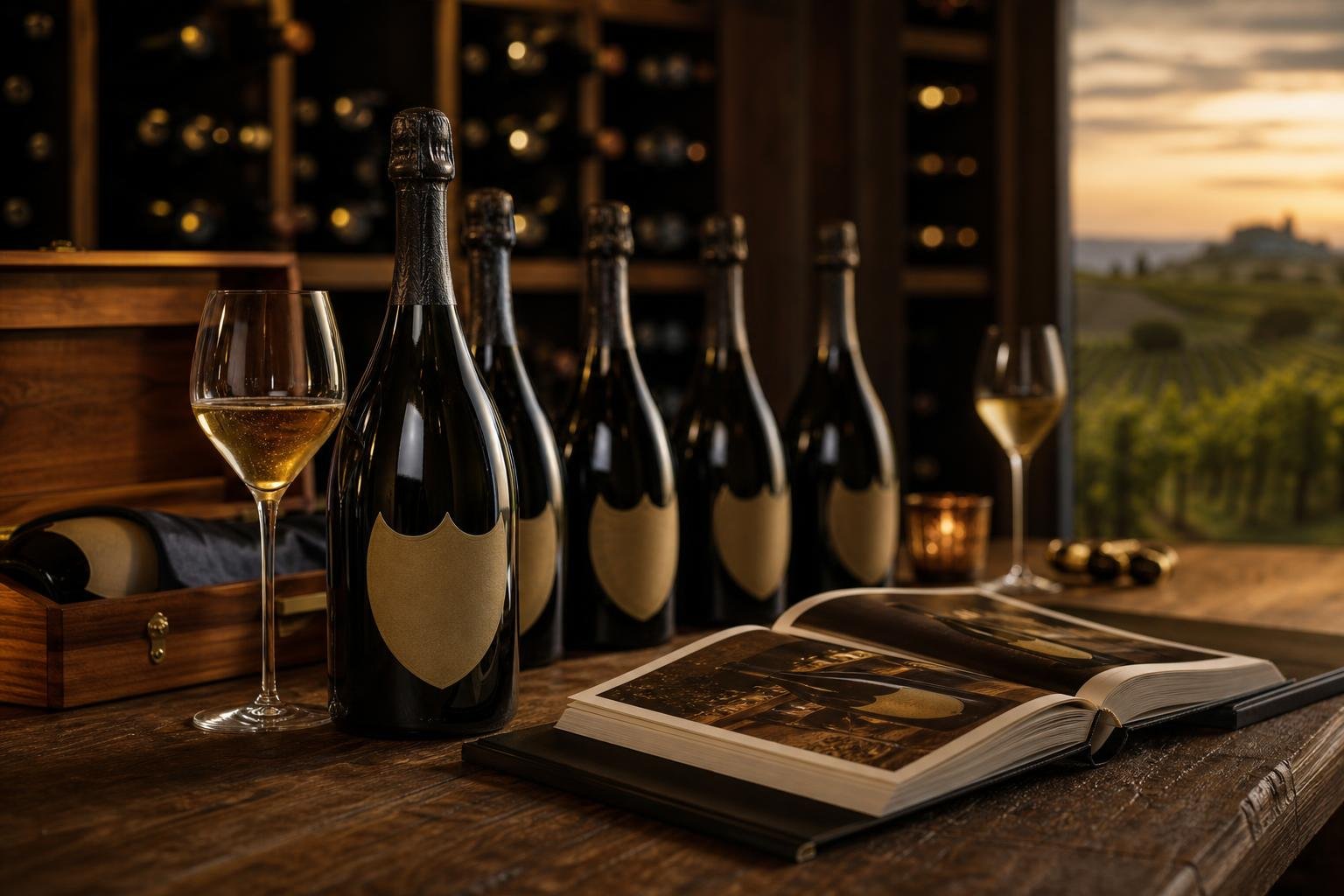
Few modern Champagnes have generated as much sustained enthusiasm as Dom Pérignon 2008. It combines the prestige of an internationally recognized label with the structure of an exceptional, slow-ripening vintage. For collectors, that pairing is compelling: the wine has a clear identity, a strong critical reputation and the capacity to develop for decades when stored correctly.
Dom Pérignon is the prestige cuvée of Moët & Chandon and is produced only as a vintage Champagne. Unlike a non-vintage blend, which can draw on reserve wines from several years, every bottle bearing 2008 reflects one growing season. Dom Pérignon is not declared in every year, although declarations have become relatively frequent in recent decades.
The remarkable 2008 growing season
The year initially tested Champagne's growers. Much of the season was cool and unsettled, slowing development and preserving acidity. Conditions improved decisively toward harvest, with dry, sunny weather and cool nights helping the grapes reach physiological maturity without sacrificing freshness. The result was fruit with concentrated flavor, healthy acidity and the structural precision required for long-lived sparkling wine.
Across Champagne, 2008 is now regarded as one of the strongest vintages of the early twenty-first century. Its finest wines tend to combine ripeness with tension rather than relying on sheer richness. That balance is particularly valuable in traditional-method sparkling wine because acidity supports both freshness and gradual development after disgorgement.
The attraction of 2008 lies not in power alone, but in the way concentration, acidity and texture remain in equilibrium.A deliberate and unusual release
Dom Pérignon 2008 was assembled in equal proportions of Chardonnay and Pinot Noir. The wine spent approximately a decade developing in the producer's cellars before its commercial release. Notably, Dom Pérignon released the warmer, more immediately expressive 2009 before the 2008. The cooler 2008 needed additional time to integrate and reveal its intended harmony.
That reversal of chronological order became part of the vintage's story. It showed that release decisions were based on the wine's evolution rather than a rigid calendar. The 2008 release also became closely associated with longtime cellar master Richard Geoffroy, who handed responsibility to Vincent Chaperon in 2019 after nearly three decades at the house.
What Dom Pérignon 2008 tastes like
Well-stored bottles commonly show citrus, white flowers and stone fruit, followed by more developed notes of toast, pastry, smoke and gentle spice. The palate is concentrated but controlled, with fine bubbles, chalky tension and a persistent saline finish. Its defining feature is contrast: ripe fruit is set against pronounced freshness, while creamy lees-derived texture is checked by a firm mineral impression.
The wine remains relatively youthful. With further bottle age, primary citrus and orchard-fruit notes should gradually give way to brioche, roasted nuts, honey and savory complexity. Development is never perfectly uniform, however. Storage history, bottle size and cork performance can create meaningful differences between individual bottles.
Why collectors keep buying it
Collector demand rests on more than taste. First, 2008 has a broad reputation as an outstanding Champagne vintage, which gives the wine an easily understood position in the market. Second, Dom Pérignon is produced in meaningful quantities and distributed internationally. That makes prices and auction results more transparent than those of extremely rare grower Champagnes.
Third, the wine offers a long potential drinking arc. It can already be enjoyed for its energy and precision, yet sound bottles should continue to evolve for many years. Large formats such as magnums are particularly sought after because wine generally develops more slowly in them, although condition and provenance remain more important than format alone.
Packaging can also affect value. Standard bottles, gift boxes, limited presentation cases and the 2008 Legacy Edition should not automatically be treated as interchangeable. Collectors should distinguish original packaging from the wine itself and verify exactly what is being offered. Decorative packaging may enhance desirability, but it cannot compensate for poor storage.
Provenance matters more than predictions
Champagne is sensitive to heat, light and repeated temperature changes. A pristine bottle from a professional, temperature-controlled cellar is usually a better purchase than a cheaper example with an uncertain history. Buyers should inspect the label, capsule, fill level and packaging while asking for invoices or storage records where possible.
For long-term keeping, a stable environment around 10–12°C is preferable, with darkness, minimal vibration and suitable humidity. Traditional cellar practice stores bottles horizontally, although stability is more important than repeatedly changing their position. Frequent movement and warm display cabinets are undesirable.
Is Dom Pérignon 2008 a sound investment?
It has many qualities collectors favor: a renowned producer, a celebrated vintage, international demand and credible ageing potential. Nevertheless, wine is not a guaranteed financial asset. Auction commissions, insurance, storage costs and market cycles can substantially reduce returns. Prices may also differ by bottle condition, format, tax status and geographic market.
The strongest reason to buy Dom Pérignon 2008 is therefore its quality as a wine. It represents a cool, late-ripening Champagne season interpreted through one of the region's most famous cuvées. Its combination of concentration, freshness and historical release narrative explains why collectors continue to pursue it—and why patient drinkers may ultimately receive the greatest reward.