Nicolas Joly’s Coulée de Serrant 2002 is not simply an old Loire white. It is a mature expression of Chenin Blanc from one of France’s most distinctive vineyards, made by one of biodynamics’ most influential advocates. At more than two decades of age, a well-stored bottle can offer a fascinating combination of richness, acidity, oxidative complexity and mineral tension. It can also be unpredictable, making provenance and careful service essential.
A remarkable Loire monopole
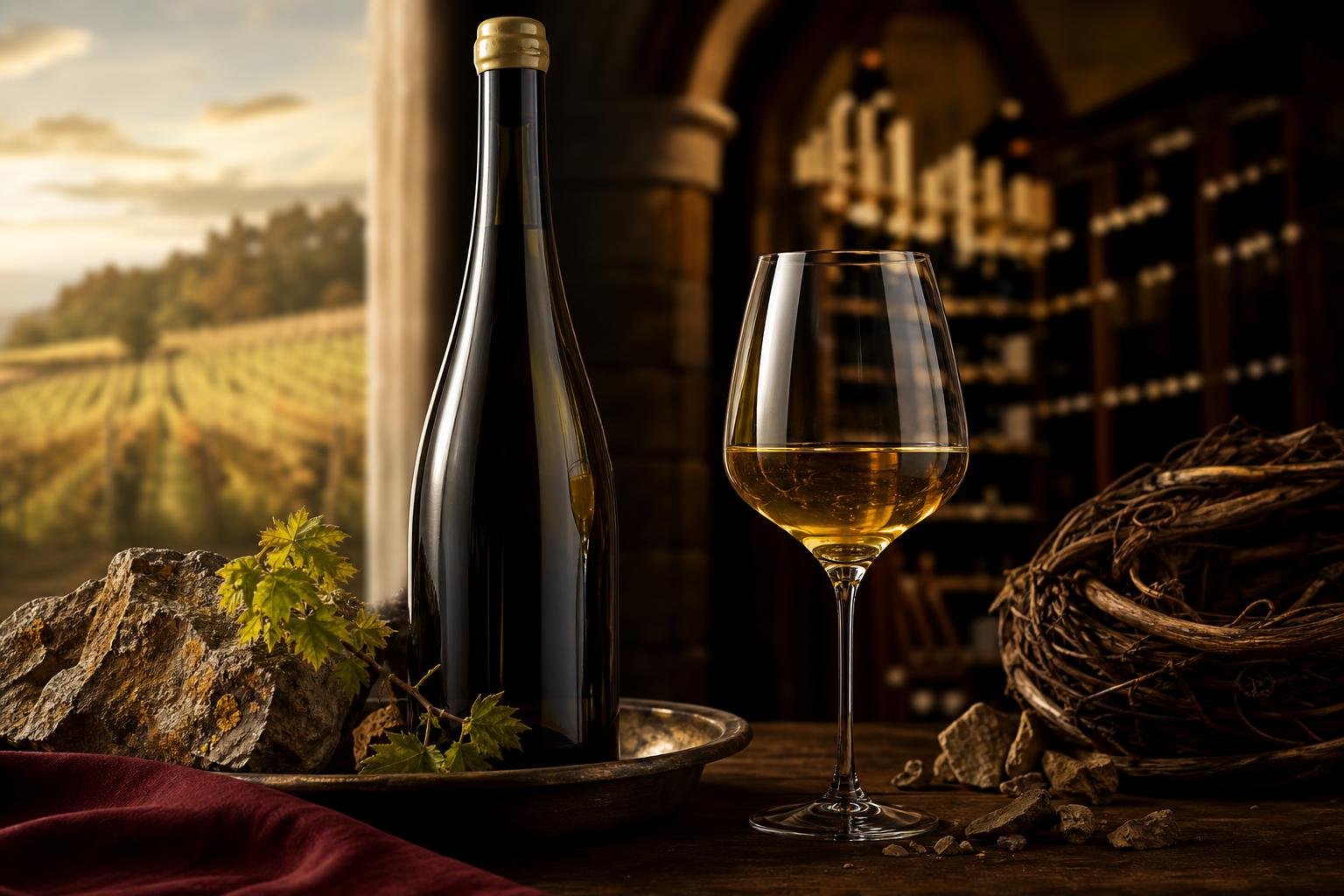
Coulée de Serrant is a roughly seven-hectare, wholly estate-owned vineyard within Savennières, on the north bank of the Loire near Angers. Its steep slopes descend toward the river and are based principally on schist, a dark, fractured rock associated with many of the area’s most structured Chenin Blanc wines.
The site’s recorded viticultural history reaches back to the 12th century, when Cistercian monks cultivated vines there. Today, Coulée de Serrant has its own appellation and remains a monopole of the Joly family. Nicolas Joly took responsibility for the estate in the late 1970s and subsequently converted its vineyards to biodynamic agriculture, becoming an internationally prominent spokesman for the movement.
Coulée de Serrant is compelling because vineyard, grape and grower form an unusually inseparable identity.
Why Chenin Blanc ages so well
Chenin Blanc is naturally high in acidity, an important structural advantage for long ageing. In Savennières it can produce dry, powerful wines with considerable extract, while late harvesting may add ripe fruit, honeyed notes or a modest impression of sweetness. The grape’s evolution is rarely linear: youthful apple, quince and citrus can gradually develop into beeswax, lanolin, dried apricot, chamomile, saffron and toasted nut aromas.
Mature Chenin may also show bruised apple, mushroom, hay or gentle oxidative notes. These are not automatically faults. The distinction lies in balance. Savoury complexity supported by acidity can be beautiful; flatness, excessive volatile acidity, mustiness or a strongly sherried character may indicate deterioration or storage problems.
Understanding the 2002 vintage
The 2002 vintage is generally considered a successful year for Loire white wines, particularly Chenin Blanc, whose acidity helped preserve freshness as the wines matured. Vintage reputation, however, is only a starting point. Coulée de Serrant is harvested at low yields and commonly through successive passes, allowing selection according to ripeness. The estate’s cellar approach has traditionally avoided making new oak the dominant flavour.
Biodynamics is central to Joly’s philosophy, incorporating organic farming alongside preparations and work timed according to natural cycles. It is reasonable to discuss these methods as part of the wine’s identity, but not to claim that biodynamics creates a specific flavour. The taste still arises from many interacting factors, including site, vine age, ripeness, fermentation, élevage and bottle development.
What a sound bottle may taste like
A healthy Coulée de Serrant 2002 may open with baked quince, preserved lemon, yellow plum and dried flowers. With air, more savoury notes can emerge: beeswax, ginger, anise, walnut skin, wet stone and a faint smokiness often associated descriptively with schist-grown Chenin. The palate is likely to feel broad and textured rather than conventionally crisp, yet acidity should provide direction and length.
Expect bottle variation. Natural cork, transport and storage conditions become increasingly important after 20 years. A bottle kept consistently cool and dark has a better chance than one with an unknown auction or retail history. A depressed cork, seepage, an unusually low fill level or heat-damaged capsule should prompt caution.
Serving the wine intelligently
Stand the bottle upright for several hours so sediment can settle. Serve it cool rather than cold, at approximately 12–14°C; refrigerator temperature can suppress its aroma and exaggerate hardness. Open the bottle and taste immediately before deciding whether to decant. Although robust young Coulée de Serrant can benefit from substantial air, a mature 2002 may evolve quickly and should not be decanted automatically.
Use a generous white-wine or Burgundy-shaped glass. Follow the wine over an hour or more, noting whether fruit and floral details expand or whether oxidation begins to dominate. This is a bottle that rewards conversation and attention rather than hurried drinking.
Food pairings for mature Chenin
The wine’s combination of body, acidity and savoury maturity suits roast chicken, veal with mushrooms, pike-perch in a cream sauce, or pork with baked apples. Its spice and texture can also complement mildly curried shellfish or roasted root vegetables. Mature Comté is an excellent cheese pairing, while strongly sweet desserts are best avoided because they can make a largely dry wine seem severe.
A bottle for adventurous drinkers
Coulée de Serrant 2002 is unlikely to resemble polished, fruit-led white wine. Its appeal lies in individuality: an ancient site, age-worthy Chenin Blanc, unconventional farming and long bottle evolution. When provenance is sound, it can deliver a layered and intellectually engaging experience. Even then, variation is part of the proposition. Open it with curious company, suitable food and enough time to watch the glass change.