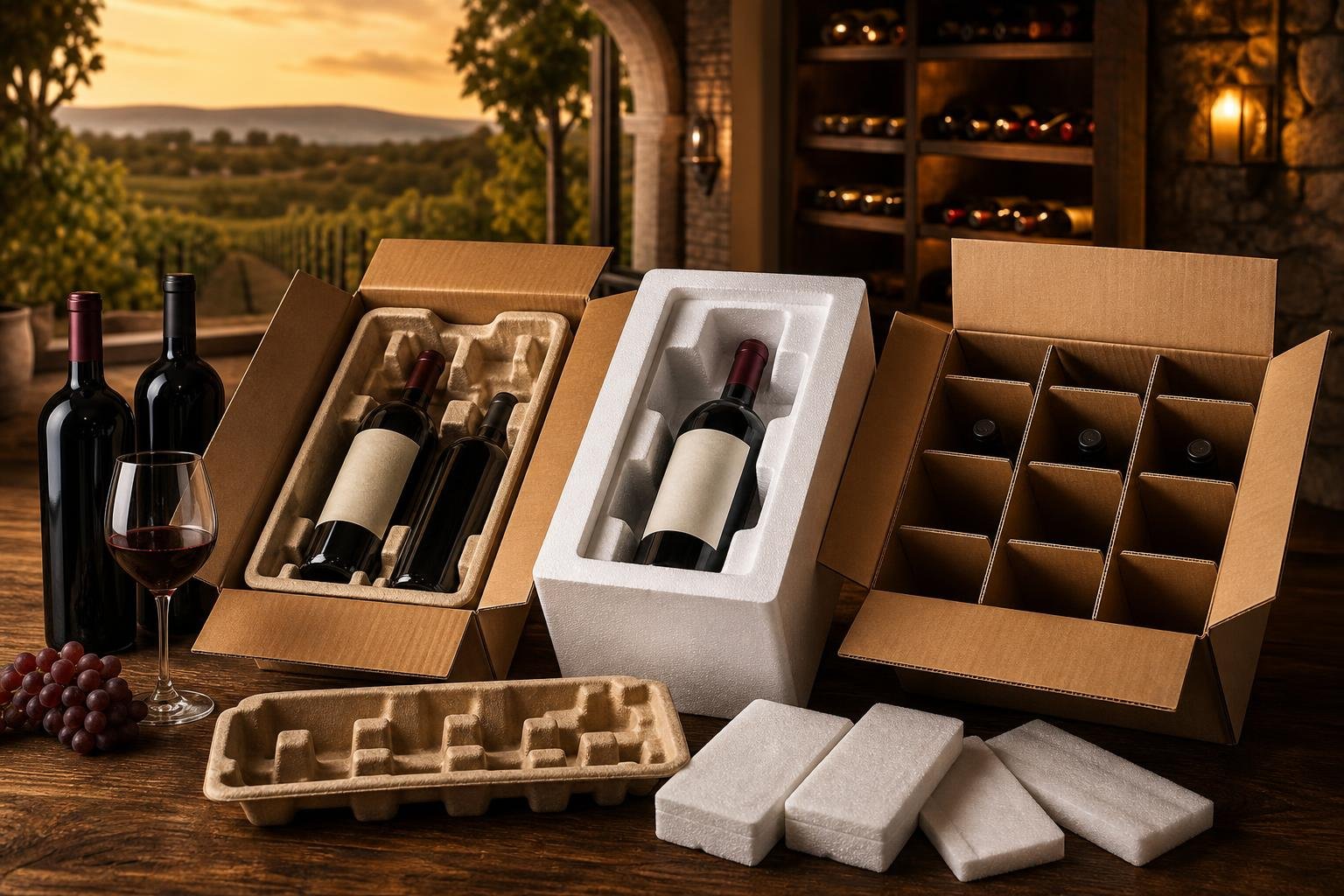
A bottle of wine is a deceptively difficult object to ship. It is heavy for its size, narrow at the neck, vulnerable at the shoulder and often made from glass that varies considerably in thickness. Burgundy, Bordeaux, Rhône, sparkling-wine and unusually shaped bottles may all behave differently inside the same carton. The best wine box is therefore not simply the strongest-looking one; it is a complete, tested system that keeps bottles separated, immobilized and protected from impact.
Start With a Purpose-Built Wine Shipper
Purpose-built wine shippers combine a corrugated outer carton with internal components designed around bottle geometry. They are available for one, two, three, six or twelve bottles, although smaller packs can be easier to handle and place less stress on the carton if dropped. A suitable system should match the exact bottle format, total packed weight and carrier requirements. Never assume a standard insert will safely hold a broad-based Burgundy bottle, a tall Riesling flute or a heavy sparkling-wine bottle.
The most reliable wine box is not a carton filled with improvised padding, but a matched outer box and insert tested as one package.Molded-Pulp Inserts: The Best All-Round Choice
Molded-pulp shippers are an excellent general-purpose option. Their formed trays cradle the bottle at several points, create space between adjacent bottles and help absorb shocks. Pulp is usually lighter and less bulky than many foam systems, and it may be recyclable where local facilities accept clean molded fiber. It also presents a more environmentally considered image for wineries and merchants. Its limitations are moisture sensitivity and fit: an insert designed around a regular 750-milliliter Bordeaux bottle may not secure a wider or longer bottle.
Foam Shippers for Fragile or Valuable Bottles
Expanded polystyrene and polyethylene foam systems offer strong cushioning and good thermal resistance. They can be appropriate for rare bottles, long journeys or shipments exposed to rapid temperature changes. A precisely cut foam cavity also limits movement particularly well. The disadvantages are greater bulk and a difficult environmental profile, especially where foam recycling is unavailable. Foam should not be treated as a license to ship in extreme weather; insulation delays temperature change but does not provide indefinite cooling.
Inflatable Air-Column Packaging
Air-column sleeves surround a bottle with interconnected chambers and can provide effective impact protection at relatively low shipping weight. Before inflation, they occupy little storage space, making them useful for small businesses. However, their performance depends on correct inflation, suitable film quality and a close fit. Puncture, failed seals or underinflation can reduce protection. Air sleeves should still sit inside a robust corrugated carton and should not allow the bottle to move freely.
Corrugated Dividers and Cell Packs
Simple fiberboard dividers are economical, but they are better suited to controlled distribution than to demanding parcel networks unless incorporated into a tested design. Dividers prevent glass-to-glass contact, yet they may offer limited cushioning against a corner or edge drop. For direct-to-consumer shipping, engineered pulp, foam or air-column systems generally provide more protection than a thin partition alone. Loose materials such as crumpled paper or packing peanuts are poor substitutes because bottles can migrate through them.
The Outer Carton Matters
A high-performing insert can fail inside a weak box. Look for a new corrugated carton rated for the packed load and intended for parcel shipment. Double-wall construction is often sensible for heavy multi-bottle orders, while a properly specified single-wall carton may be sufficient for smaller tested packs. Reused boxes can lose compression strength through moisture, creasing and previous impacts. Seal every designated seam with pressure-sensitive packing tape, following the packaging manufacturer’s instructions rather than adding random layers that do not improve structural performance.
Temperature Protection Is a Separate Decision
Packaging guards against breakage, but wine is also sensitive to heat and prolonged cold. High temperatures can accelerate ageing, encourage leakage and damage labels or closures. Insulated liners and refrigerant packs can moderate conditions, but packs require careful placement to avoid condensation and direct contact with bottles. In hot weather, faster service and delaying dispatch until a cooler window may be more effective than adding insulation alone. Temperature-control choices should reflect route, season, transit time and the wine’s value.
Do Not Overlook Shipping Regulations
Safe packaging does not make a wine shipment legal. Rules vary by country, state, province and carrier. In the United States, the Postal Service does not accept intoxicating liquor in domestic mail. Private carriers generally require approved or licensed alcohol shippers, appropriate service agreements, compliant labeling and an adult signature. Policies change, and cross-border shipments may also involve duties, permits and documentation. Confirm current laws and carrier terms before packing any bottle; private individuals cannot assume they may send wine through an ordinary parcel service.
The Practical Verdict
For most commercial shipments, a carrier-accepted corrugated carton with fitted molded-pulp inserts offers the best balance of protection, weight, cost and disposal. Foam is compelling when cushioning and thermal resistance take priority, while air-column packaging is useful where storage efficiency matters. Whatever the material, choose a system tested for the bottle shape and pack count, follow its assembly instructions exactly, and avoid empty space. For collectible or irreplaceable wine, professional packing, insurance and a specialist wine-logistics service are usually wiser than improvisation.