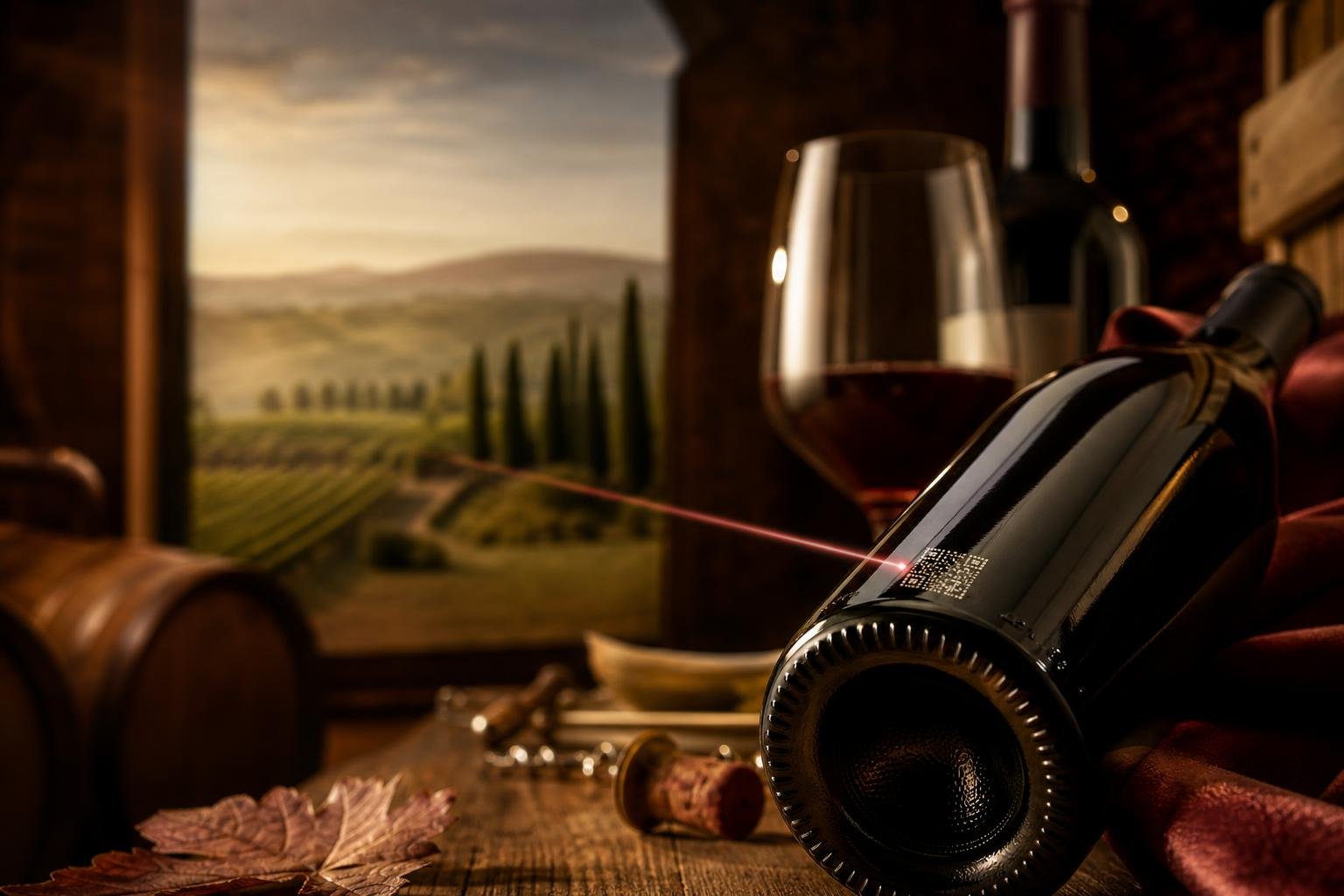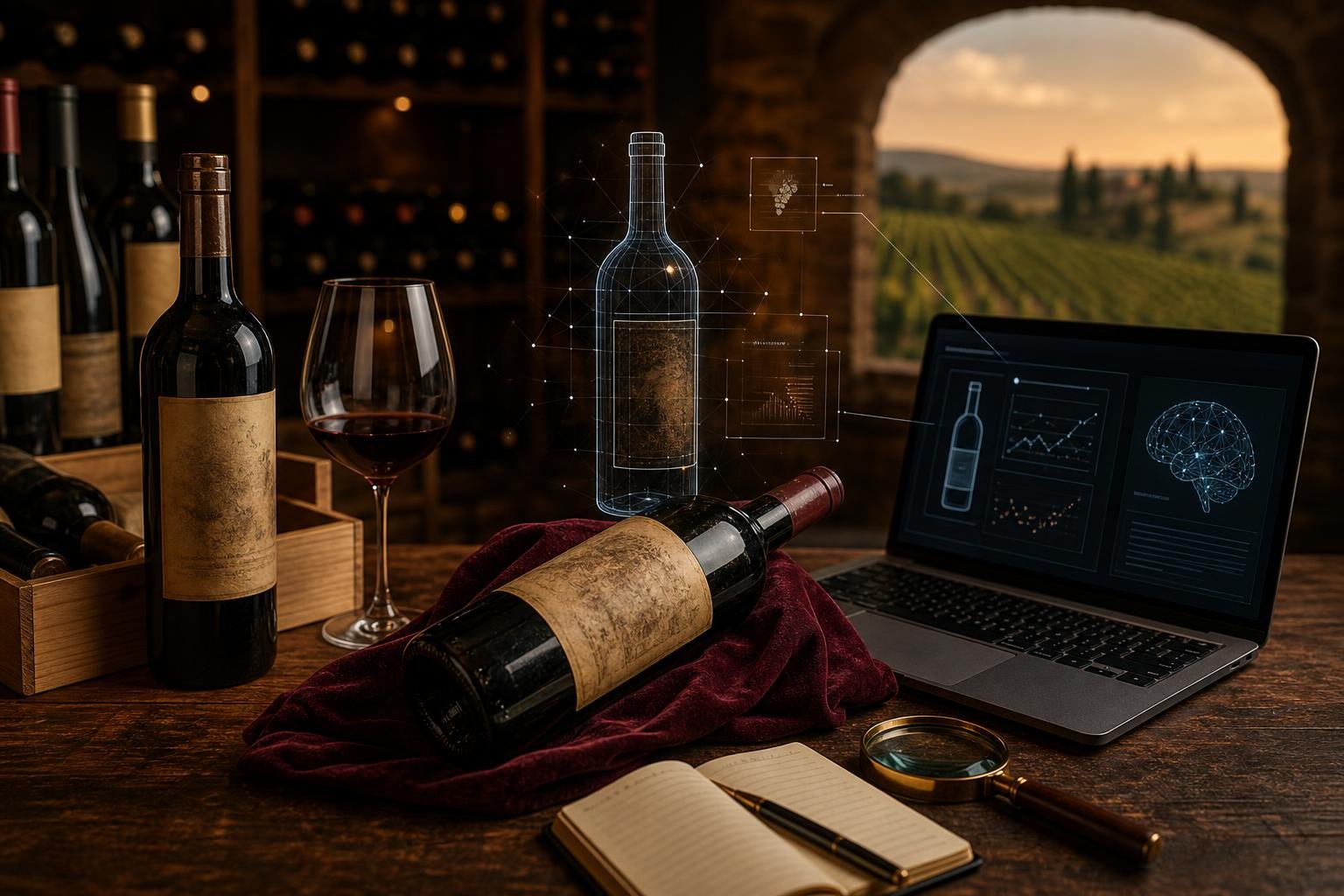
Point a smartphone at a wine label and artificial intelligence may identify the producer, cuvée, appellation and vintage within seconds. Estimating what that bottle is worth is considerably harder. Recognition is primarily a computer-vision problem; valuation requires evidence about condition, provenance, market liquidity and location. AI can accelerate both tasks, but it cannot turn a blurred photograph into a dependable auction appraisal.
How AI Identifies a Wine Bottle
Modern recognition systems combine optical character recognition, which extracts printed words and numbers, with image-matching models trained on label databases. The software compares typography, crests, illustrations, bottle shapes and capsule details with known examples. It may then connect the result to structured information such as region, grape varieties, classification and drinking window. Consumer apps already use label scanning to retrieve wine records, ratings and merchant offers.
The best results come from a sharp, well-lit image showing the complete front label. A second photograph of the back label can reveal the importer, alcohol level, lot code or legally required origin statement. These clues help distinguish wines with similar branding. Bottle size also matters: a 750-millilitre bottle, magnum and half-bottle of the same vintage are separate market items and may command very different prices per litre.
Why Identification Can Still Go Wrong
Wine labels are unusually difficult visual subjects. A château may retain nearly identical artwork for decades, while a producer can bottle several vineyards under subtly different names. Vintage numerals may be stained, torn or hidden by glare. Reconditioned labels, export labels and special commemorative releases add further ambiguity. An AI model may also confidently select the closest database match even when the exact bottle is absent—a familiar weakness of probabilistic systems.
Recognising the label identifies the wine; it does not authenticate the bottle or establish its value.How an Algorithm Estimates Value
Once a wine is identified, a valuation model can compare retailer listings, auction estimates and recorded sales for the same producer, cuvée, vintage and format. It can also examine broader signals: critic reviews, vintage reputation, regional demand, scarcity and recent price movements. Yet asking price is not the same as selling price. Auction hammer prices may exclude the buyer’s premium, while retail prices can include taxes, storage costs and merchant margins.
There is no single universal value. A collector may want fair-market value, an insurer may require replacement value, and an auction house will estimate a realistic sale range. Geography changes the answer because taxes, import rules, availability and local demand differ. Large formats can attract premiums, but not consistently; their smaller pool of buyers can also make them less liquid. Sound AI should therefore provide a range, date and data source rather than one authoritative number.
Condition and Provenance Remain Decisive
Two bottles with identical labels can have markedly different values. Auction specialists inspect the fill level, signs of seepage, capsule condition, label damage and evidence of heat exposure. With older wine, some loss through cork and closure is expected, but an unusually low fill may suggest oxidation or poor storage. Interpretation also varies with bottle shape and age, so a simple image score can be misleading.
Provenance—the documented history of ownership and storage—is particularly important for rare wine. Original purchase invoices, professional storage records and an intact case can support confidence. A cellar kept at stable, cool conditions is generally more persuasive than an undocumented bottle displayed for years in a warm room. AI can organise records and flag inconsistencies, but it cannot reconstruct missing history from the front label.
Can AI Detect Counterfeit Wine?
AI can assist authentication by comparing printing, spacing, paper texture, capsule markings and glass details with verified reference bottles. It may detect anomalies too subtle for an untrained buyer. Nevertheless, a convincing label image does not prove that the liquid, cork or bottle is genuine. Specialists may use ultraviolet or infrared imaging, inspect cork branding and bottle construction, and, in exceptional cases, commission laboratory analysis. Reference quality is crucial: a model trained on incorrectly catalogued bottles can institutionalise mistakes.
The Most Practical Way to Use It
For an everyday bottle, a label-scanning app can provide a useful identification and approximate retail context. For a potentially valuable bottle, photograph the front and back labels, capsule, fill level, base and any case markings. Record the bottle size and storage history. Then compare recent transactions for the exact wine and format—not merely the producer—and consult a reputable auction specialist or merchant before selling, insuring or opening it.
The Verdict
Artificial intelligence is already a capable wine-cataloguing assistant and a useful first-pass valuation tool. Its speed is valuable when inventorying a large cellar or deciphering an unfamiliar label. But fine-wine value rests on physical condition, credible provenance and actual market demand. The most reliable conclusion comes from combining machine recognition and current sales data with the trained eye—and healthy scepticism—of an experienced wine professional.