A branded cork can offer valuable evidence when authenticating a bottle of wine, but it cannot prove authenticity by itself. Names, symbols, vintages and appellations printed or burned onto corks may confirm that the closure is consistent with a producer’s known practices. They can also expose obvious contradictions. Yet corks can be replaced, copied or transferred, while legitimate bottles may carry unexpected closures because of recorking, bottling arrangements or historical changes at the estate.
A cork is best treated as one witness in an investigation, not as the final verdict.What Cork Branding Can Reveal
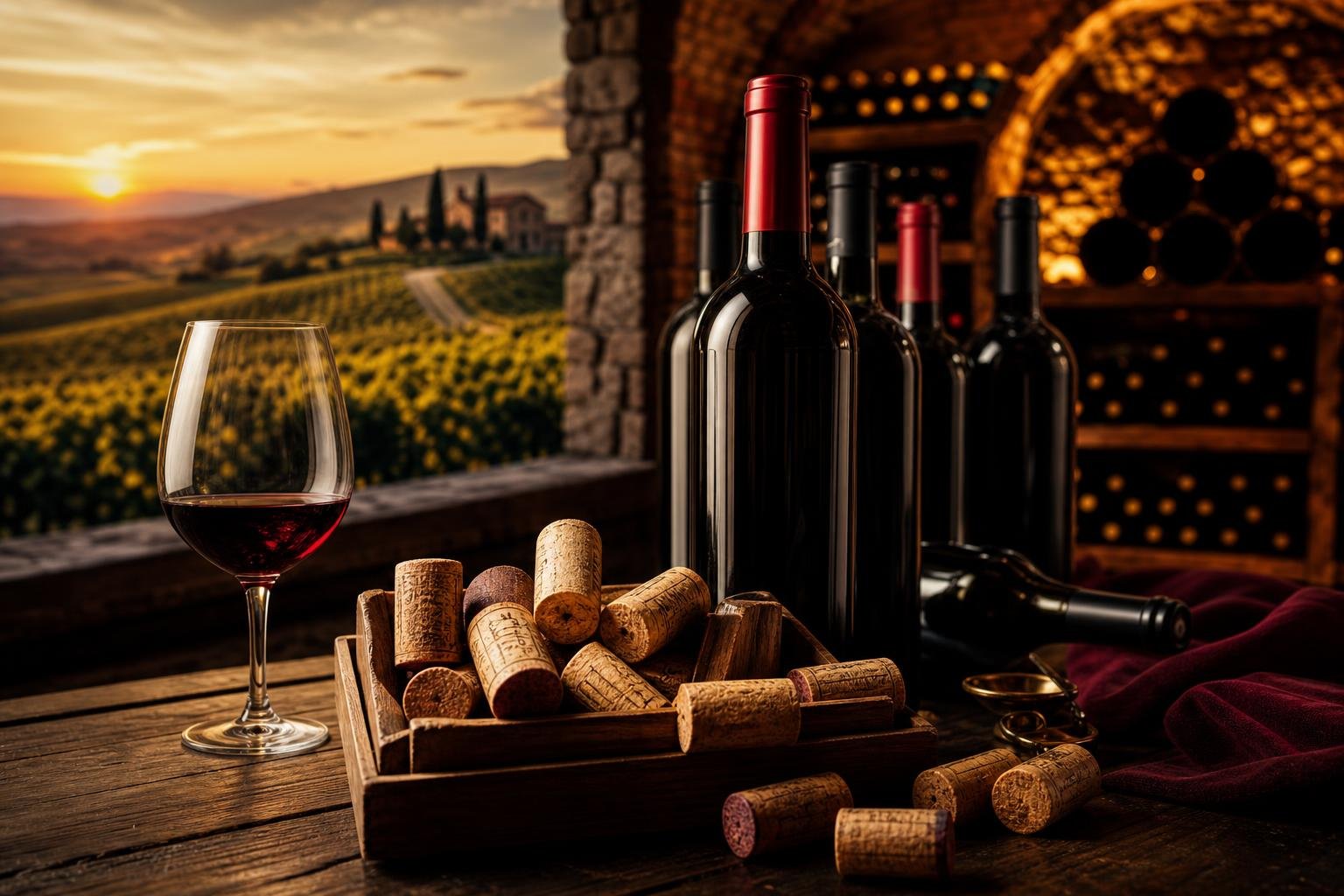
Many producers mark natural corks with the estate or merchant name, a logo, the appellation, the vintage or some combination of these details. If a cork extracted from a supposedly rare château bottling names an unrelated producer, carries an impossible vintage or uses branding inconsistent with documented examples, suspicion is justified.
The direction and position of the text may also be informative. Authenticators compare typography, spacing, logos and wording with corks from bottles of reliable provenance. Even the length and diameter of the cork can matter because closure specifications differ among producers, bottle formats and periods. Such comparisons are most persuasive when several securely sourced reference bottles are available.
However, variation is normal. Cork suppliers, printing equipment and quality grades change. A producer may use more than one bottling line or purchase closures from several suppliers. Minor differences should therefore prompt further research rather than an immediate accusation of fraud.
Why a Convincing Cork Is Not Proof
Cork branding is reproducible. A counterfeiter can order newly printed closures, reuse an old cork or transfer genuine packaging components to a different bottle. A closure that appears suitably aged may still be younger than the wine it claims to protect. Conversely, an authentic old bottle may have received a replacement cork during an estate-approved recorking program.
Opening the bottle does not necessarily settle the matter. Old natural cork is fragile and may break during extraction, obscuring its markings. Wine stains can make text difficult to read, while poor storage can cause shrinkage or deterioration. The physical condition of the cork indicates how it has aged and interacted with its environment, but appearance alone cannot establish a precise date.
Historical Context Is Essential
Before interpreting a cork, an authenticator must understand when and where the wine was bottled. Estate bottling became widespread at different times across regions and producers. Some wines were historically shipped in cask and bottled by merchants, restaurants or private customers. A merchant-branded cork may therefore be entirely appropriate for one bottle and deeply suspicious for another.
Packaging practices also evolve. Estates redesign crests, alter their legal names and change the language used on corks. Wars, ownership changes, shortages and commercial partnerships can produce exceptions. Modern expectations should never be projected automatically onto nineteenth- or early twentieth-century bottles.
How to Examine a Cork Properly
When a valuable bottle is opened, the cork should be extracted as carefully as possible and retained. Photograph it from every side under neutral light, recording its dimensions, branding and wine penetration. A two-pronged opener or a specialist old-wine extractor may reduce damage, although no tool guarantees success with a badly degraded closure.
Look for internal consistency. Does the producer name match the label? Is the stated vintage plausible? Does the logo resemble documented period examples rather than a modern redesign? Is the cork’s condition compatible with the fill level and storage history? A pristine closure in a bottle with severe evaporation deserves scrutiny, just as a saturated, crumbling cork may be inconsistent with an unusually high fill.
None of these observations is conclusive in isolation. Storage temperature, humidity, bottle orientation and closure quality can create striking differences among genuine bottles from the same case.
The Rest of the Bottle Matters More
Serious authentication considers the bottle as a complete object. The label’s paper, printing method, ink, typography and pattern of oxidation should be assessed alongside the capsule, glass, punt, seams and embossed markings. The fill level, wine colour and sediment may provide further context, although all vary naturally with storage and wine style.
Provenance is often more persuasive than any packaging detail. Original purchase records, auction invoices, cellar inventories, photographs and an unbroken chain of ownership can substantially strengthen confidence. A famous label offered without a credible history remains risky even when its cork looks convincing.
When Scientific Testing Helps
For especially valuable bottles, specialists may use non-destructive imaging or laboratory analysis. Techniques can investigate glass composition, label materials, pigments or the chemical profile of the wine. Radiocarbon and isotope-based methods may help determine whether material is compatible with a claimed period, but testing has limitations and often produces a range rather than an exact vintage. Sampling can also require opening the bottle.
Expert conclusions are strongest when documentary research, physical inspection and scientific evidence agree. Buyers should seek an independent specialist rather than relying solely on a seller’s confidence or a photograph of the cork.
The Verdict
Cork branding can support authenticity and can be excellent at revealing inconsistencies. It cannot, however, prove that the wine, bottle and label began life together. A correctly marked cork may be copied, while an unusual cork may have a legitimate historical explanation. For serious purchases, judge the closure within the broader evidence of packaging, provenance, condition and, where warranted, scientific analysis.