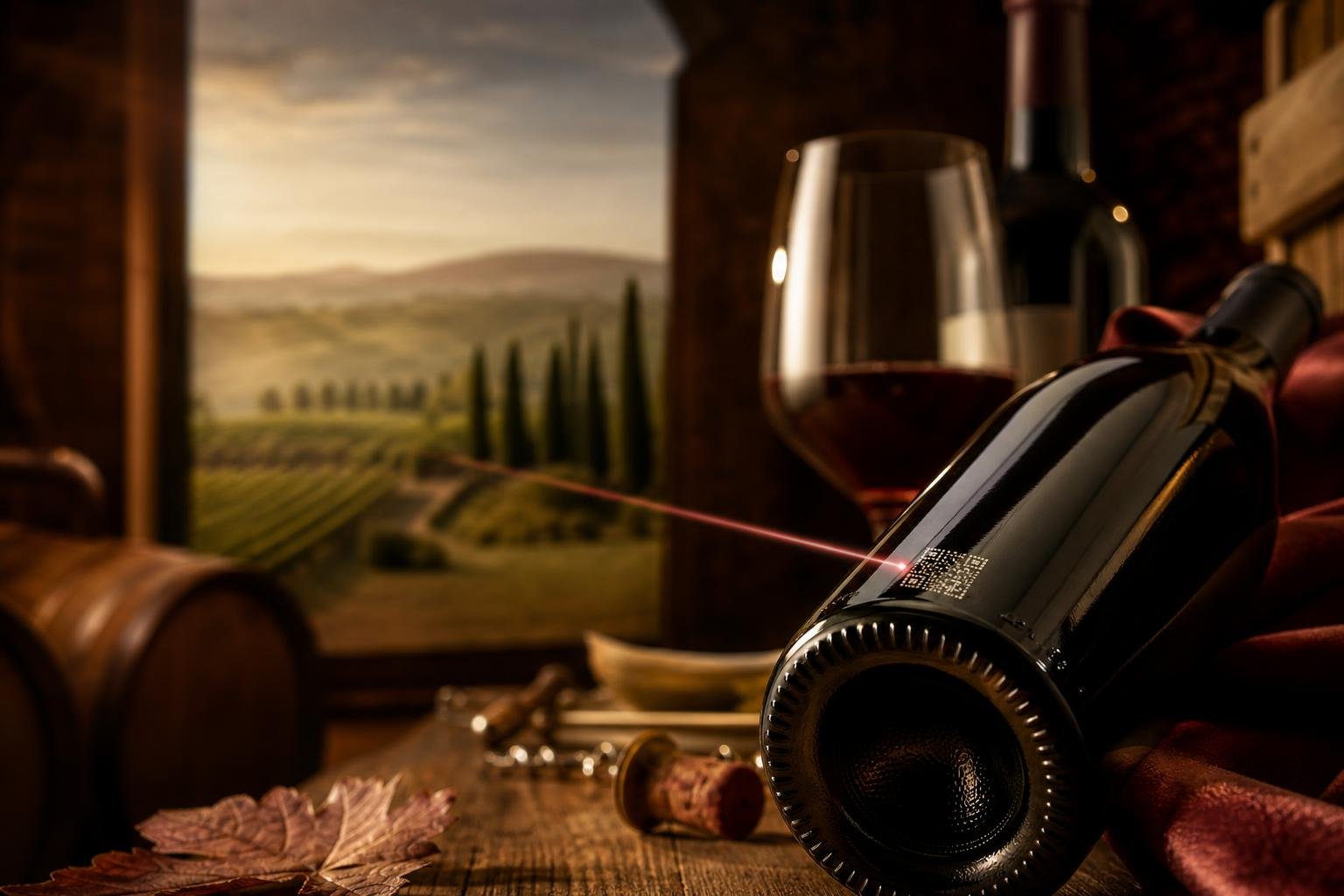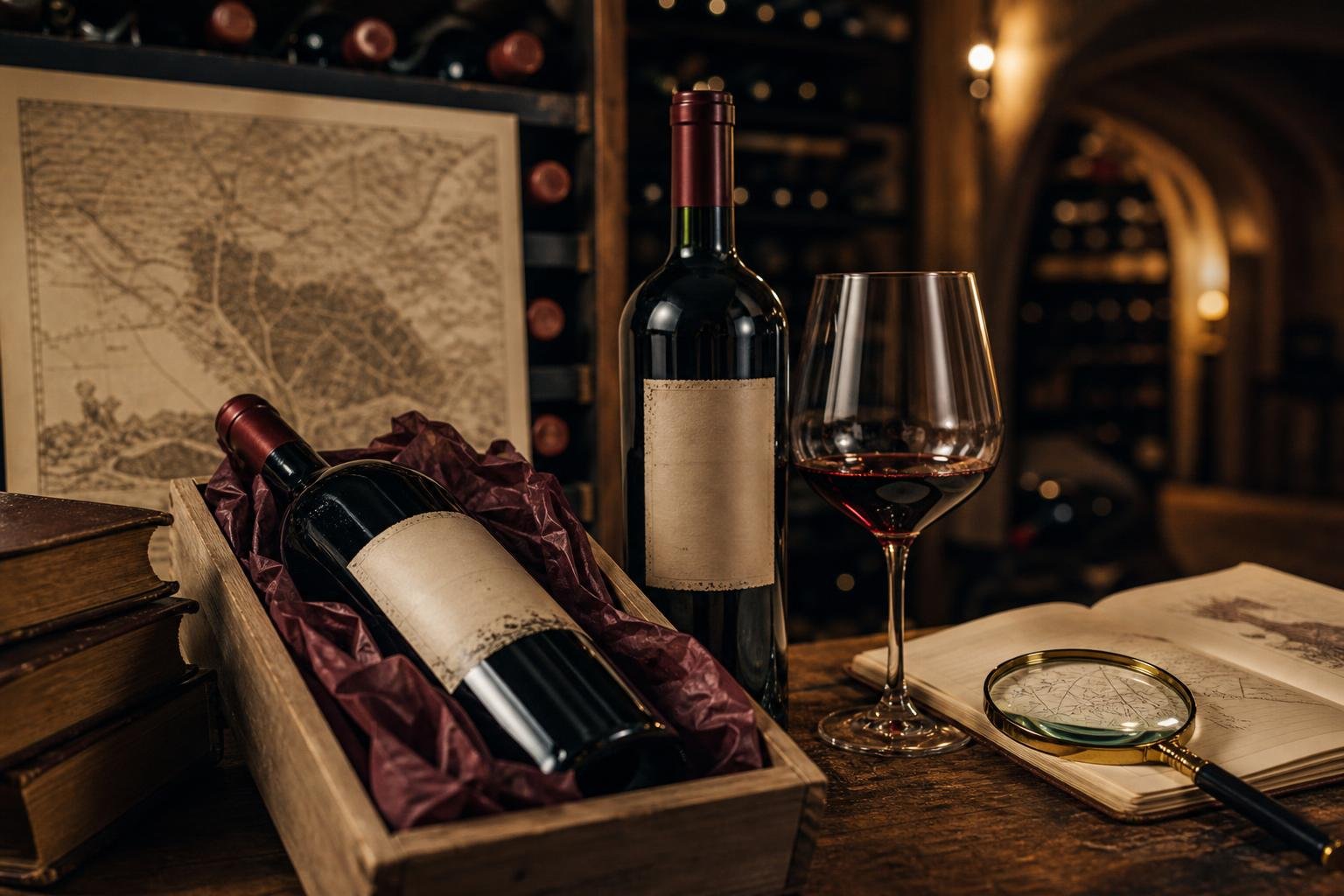
A serial number can help authenticate a bottle of wine, but it is rarely sufficient on its own. Some producers, importers and authentication platforms assign unique identifiers to bottles or cases. Others print only batch, bottling or packaging codes. The critical distinction is whether the number is unique, traceable and supported by a trustworthy database.
A serial number is useful evidence only when it connects the physical bottle to a reliable record and an independently verifiable chain of custody.
What the Number on a Wine Bottle May Represent
Not every sequence of digits is a serial number. A UPC or EAN barcode generally identifies a product type, such as a particular estate, vintage and bottle size; thousands of bottles can carry the same barcode. An importer sticker may contain internal inventory information, while a code beginning with L often identifies a production lot under European lot-marking rules. Lot codes assist traceability and recalls, but they do not necessarily distinguish one bottle from another.
Other markings can refer to a bottling line, production date, disgorgement, packaging run or label approval. In the United States, a TTB Certificate of Label Approval number concerns regulatory approval of a label rather than the identity of an individual bottle. None of these codes should automatically be treated as proof of authenticity.
When a Serial Number Is Meaningful
A number becomes valuable when the issuing producer or authentication provider maintains a record against which it can be checked. That record might include the wine, vintage, format, market of release and date of registration. Some systems combine printed identifiers with tamper-evident seals, QR codes, holograms, NFC chips or other security features.
The best verification route is the official website or a direct enquiry to the château, winery, authorized importer or named technology provider. A number that returns the correct wine is encouraging. A number that does not exist, belongs to another vintage or has already been scanned in distant markets may justify further investigation.
Why a Valid Number Is Not Conclusive
Counterfeiters can copy genuine identifiers. A valid code photographed from an authentic bottle may be reproduced on several false bottles, while an authentic empty bottle can be refilled, recorked and resold. This is why the physical connection between identifier, closure and glass matters. If the security label can be removed without damage, its evidential value is limited.
Digital ledgers are sometimes promoted as immutable records, but they do not solve every problem. A database may preserve an entry perfectly while the bottle associated with it has been altered or replaced. Authentication therefore depends on the integrity of the initial registration and the continuing link between the digital record and the physical object.
How to Check a Bottle Properly
Begin by identifying the code rather than assuming what it means. Compare its position, typography and application with known genuine bottles from the same producer and period. Producers change labels, capsules and anti-counterfeit measures over time, so a feature found on a recent release may not belong on an older vintage.
Use only an official verification portal or contact listed on the producer’s own website. Avoid links supplied solely by an unknown seller, because a counterfeit QR code can lead to a convincing imitation website. When contacting a winery, provide clear photographs of the front and back labels, capsule, cork if visible, bottle base, code and original packaging. It is prudent not to publish a complete unique code online, where it could be copied.
Next, examine provenance. In the fine-wine market, invoices, bonded-warehouse records, auction history and evidence of professional storage can be more persuasive than a number printed on glass. Check whether the bottle’s ownership story is coherent and whether its release date aligns with the documents. Gaps do not prove fraud, but implausibly perfect labels on supposedly old, poorly stored bottles deserve skepticism.
Physical Details Still Matter
Experienced specialists assess printing quality, paper, embossing, capsule construction, glass shape, fill level and closure. They also look for inconsistencies between the bottle and the practices of the producer in that vintage. Sediment and wine color may offer context, although neither can authenticate a bottle by itself. Natural variation, storage and recorking programs can complicate visual judgments.
For valuable bottles, consult a reputable auction house, merchant or independent wine-authentication specialist. Opening the bottle may reveal further evidence, but tasting is not a dependable first-line test: mature wines vary, and sophisticated substitutes can resemble the expected style.
The Practical Verdict
You can use a serial number as one component of wine authentication, provided its issuer confirms what the code represents. Treat it as a lead, not a verdict. The strongest conclusion comes from several forms of evidence agreeing: a verified identifier, correct packaging, credible provenance, sound storage history and expert physical inspection.
For inexpensive current releases, direct confirmation from the producer may be enough. For rare or costly wine, confidence should rise with the quality of the paper trail rather than with the complexity of the code. In fine wine, provenance remains the most persuasive language a bottle can speak.