An original purchase receipt can add credibility to a collectible wine, but it rarely increases value by itself. Fine-wine buyers pay for confidence: confidence that the bottle is authentic, has been stored correctly and has remained in responsible hands. A receipt may support that story by identifying where and when the wine was bought. It cannot, however, prove what happened to the bottle after the transaction.
Why Provenance Matters
Provenance is the documented history of a wine’s ownership, storage and movement. It becomes especially important for older bottles, frequently counterfeited labels and wines worth enough to justify close scrutiny. An invoice from a respected merchant, winery or established auction house can establish a credible starting point. If the buyer acquired the wine on release and kept it in professional storage, the paperwork may help describe an unusually short and reassuring chain of custody.
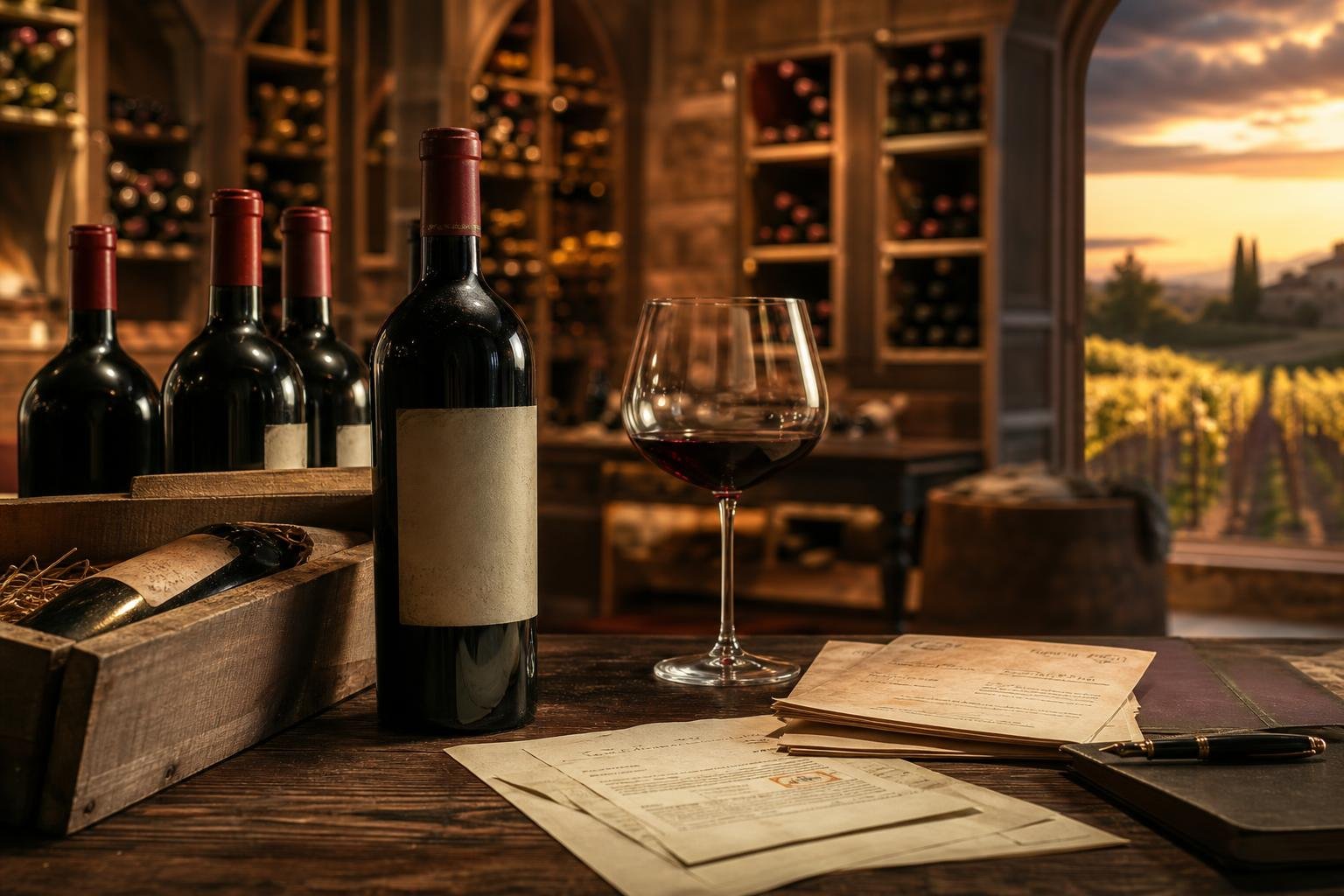
Receipts are most persuasive when their details match the wine exactly. Useful information includes the producer, vintage, bottle size, quantity, purchase date and merchant. Case numbers, lot references and delivery records can further connect the document to the bottles. A generic card receipt showing only a total payment offers much less evidence than an itemized invoice.
A receipt documents a purchase; it does not automatically document the life of the bottle.When Receipts Can Make a Real Difference
Documentation has its greatest influence in the market for rare, mature or commonly forged wine. Bottles from celebrated estates in Burgundy, Bordeaux, Champagne, Tuscany and Napa Valley may attract more confidence when supported by original invoices and consistent storage records. The same applies to large formats, complete cases and wines bought directly from an estate or its authorized distribution chain.
En primeur purchases provide a particularly clear example. Bordeaux sold en primeur is purchased while the wine is still maturing at the château, with physical delivery taking place later. The initial invoice, subsequent release or delivery documents, and bonded-warehouse records can form a coherent paper trail. Together, these documents are more useful than any single receipt because they show both acquisition and custody.
There is no universal receipt premium. Auction results depend on producer, vintage reputation, rarity, bottle condition, sale venue and current demand. Documentation may help a lot sell more readily or avoid the discount attached to uncertain provenance, but it cannot transform an ordinary bottle into a valuable one.
What a Receipt Cannot Prove
A genuine receipt does not prove that the accompanying bottle is the bottle originally purchased. Documents and bottles can become separated, cases can be mixed, and labels can be imitated. Specialists therefore examine many physical details, including glass, capsule, cork branding where visible, label printing, fill level and signs of seepage or tampering. For valuable collections, an auction house may also investigate the consignor’s ownership history.
Nor does a receipt establish sound storage. Wine bought from an impeccable retailer can deteriorate after years in a warm cupboard, a sunlit room or a garage with large temperature swings. Heat can accelerate ageing and cause expansion, seepage or pushed corks. Conversely, a bottle without its original invoice may remain highly desirable if it comes from a respected temperature-controlled cellar with strong supporting records.
Condition Still Leads the Valuation
For mature wine, buyers closely inspect the level of wine in the bottle, often called the fill or ullage. Some gradual loss is expected as corks age, but an unusually low level can suggest leakage, poor storage or oxidation. Damaged capsules, stained labels and evidence of seepage may reduce value, although cosmetic label wear can matter less when the wine’s history and physical condition are otherwise convincing.
Original wooden cases can also be valuable supporting evidence, particularly when markings, bottle sizes and quantities are consistent. Yet a case is not conclusive proof of authenticity. The strongest offering combines appropriate bottle condition, credible ownership, professional storage and documents that agree with one another.
How to Preserve Wine Documentation
Keep invoices, delivery notes, warehouse statements, auction catalogues and relevant correspondence together. Thermal-paper receipts can fade, so make a high-resolution scan while retaining the original. Record when bottles enter or leave storage, and photograph unopened cases before they are moved. Never tape paperwork to a bottle or store it in a damp cellar where ink and paper can deteriorate.
Receipts may contain addresses, customer numbers or payment information. When sharing records with a prospective buyer, provide a clear copy with unnecessary personal data redacted. An auction specialist can inspect the unedited original privately if required. Digital retailer records are also useful, especially when they can be matched to delivery and storage statements.
Receipts, Appraisals and Insurance
Purchase price should not be confused with present market value. A wine may appreciate, decline or become difficult to sell regardless of its original cost. Auction value, retail replacement value and insurance value are different measures. An appraisal should rely on current comparable sales, condition and provenance rather than simply repeating the figure printed on an old invoice.
The Verdict
Original purchase receipts can increase confidence and, in the right circumstances, marketability. Their value is greatest when they identify the wine precisely and form part of an uninterrupted record of reputable purchase and careful storage. They are supporting evidence, not a guarantee. For serious collectors, preserving the paperwork is sensible and inexpensive, but preserving the wine under stable, appropriate conditions remains far more important.