Wine auctions can look theatrical—raised paddles, rapid-fire numbers and celebrated bottles displayed like works of art—but the underlying process is straightforward. An auction house accepts wine from consignors, assesses and catalogues it, invites bids and sells each lot to the highest eligible bidder, subject to its terms and any reserve. Understanding those details is essential because the winning bid is rarely the final amount paid.
What kind of wine is sold at auction?
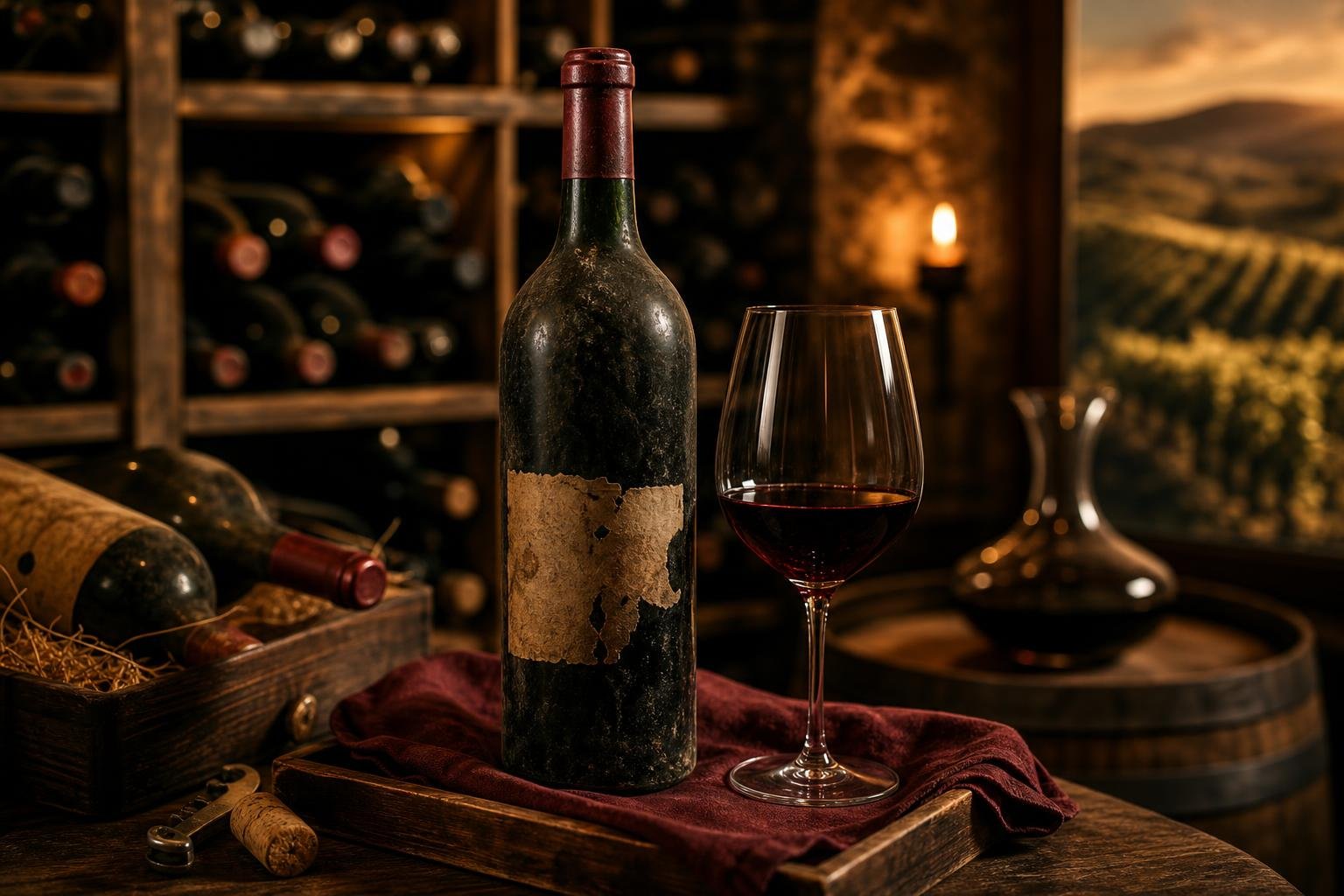
Most commercial wine auctions serve the secondary market. Collectors, estates, restaurants and merchants consign bottles they already own. Mature Bordeaux, Burgundy, Champagne, Rhône wines, Italian classics and sought-after New World labels are common, although regional houses may offer broader selections. Charity auctions operate differently: donated wines and experiences may command prices driven as much by philanthropy as market value.
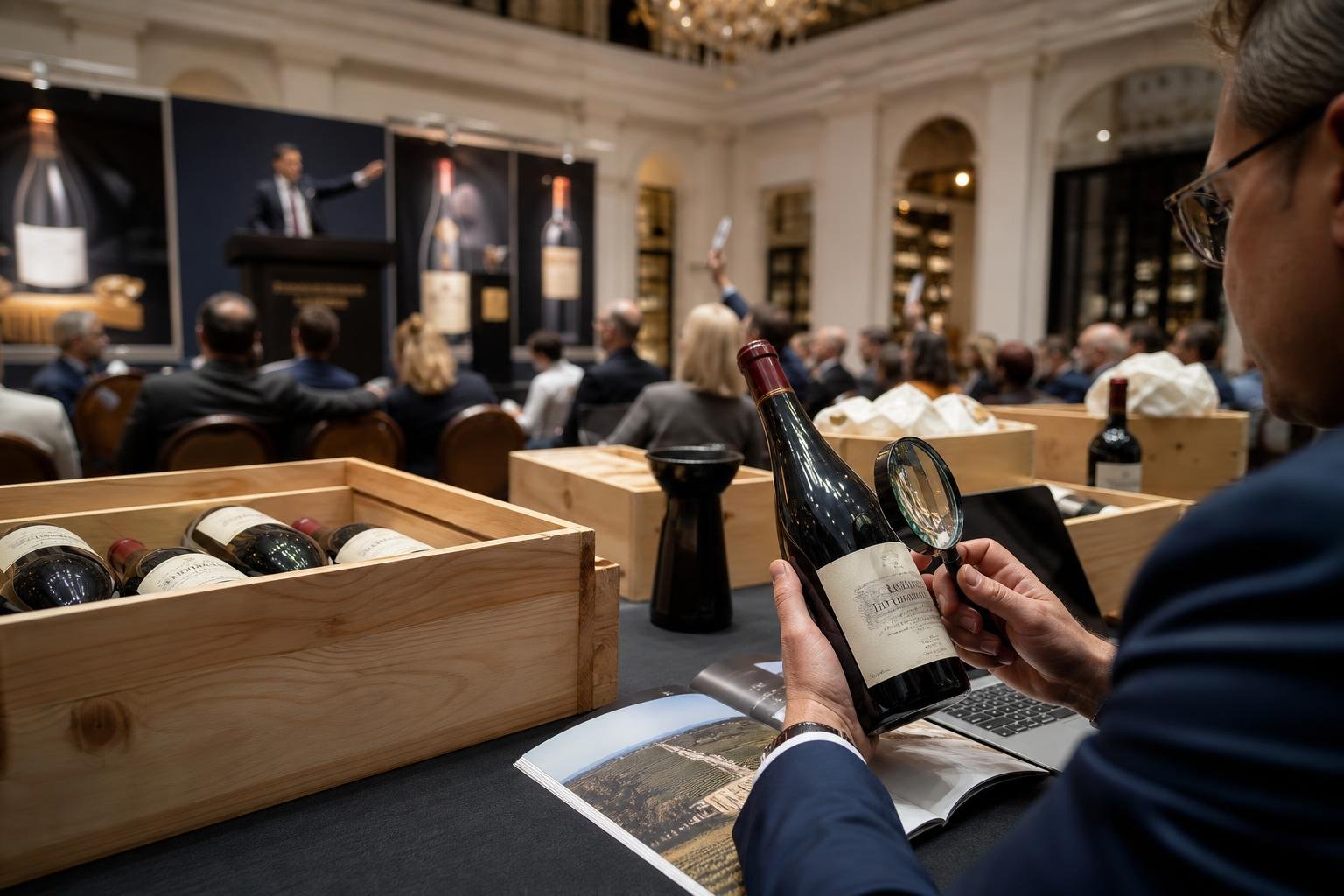
Auctions may be conducted in a saleroom, streamed live online or run as timed online sales. Live auctions proceed lot by lot under an auctioneer. In a timed auction, bidding closes at a published time, sometimes with an extension if a late bid arrives.
Understanding lots and estimates
Wine is offered in lots rather than necessarily by individual bottle. A lot might contain one rare magnum, a full 12-bottle case or a mixed collection of vintages. The catalogue identifies the producer, appellation, vintage, bottle size and quantity. It may also note original wooden cases, damaged labels, signs of seepage or replacement packaging.
Each lot usually carries a low and high estimate based on recent results, rarity, condition and current demand. This range is guidance, not a promise. A reserve—the confidential minimum accepted by the seller—may apply. At major houses it is generally set at or below the low estimate, but policies vary and bidders should read the conditions of sale.
Why provenance and condition matter
For collectible wine, storage history can be as important as the label. Auction specialists examine fill level, capsule, cork position, colour, label and evidence of leakage. In older Bordeaux bottles, the space between cork and wine is called ullage; an unusually low fill may suggest evaporation or compromised storage. Burgundy bottles have different shapes, so condition is often described by centimetres below the cork.
Provenance records may include purchase invoices, professional-storage statements and details of cellar ownership. Specialists can identify warning signs, but inspection is not an absolute guarantee of authenticity or drinkability. Buyers should examine photographs, request condition reports and understand the house's return policy.
A famous name attracts attention, but sound provenance is what gives an old bottle credibility.
Registering to bid
Prospective bidders create an account and provide identification, contact details and a payment method. Higher-value bidding may require financial references or a deposit. Registration must usually be approved before the sale begins.
Bids can be placed in person, by telephone, online or through an absentee order. With an absentee bid, the house attempts to buy the lot as cheaply as competing bids allow, up to the bidder's confidential maximum. Online platforms may perform a similar proxy-bidding function.
What happens during bidding?
The auctioneer opens a lot and invites progressively higher offers using predetermined increments. Those increments often increase with price. In a live sale, staff relay telephone and internet bids to the auctioneer. The auctioneer may also place bids on behalf of the seller up to the reserve where local law and the sale terms permit.
When no higher bid appears, the auctioneer closes the lot with the hammer. The final accepted bid is the hammer price. If bidding fails to reach the reserve, the lot may be marked unsold or passed. Some houses later invite private offers for unsold stock.
The real cost of winning
The successful bidder pays more than the hammer price. The auction house adds a buyer's premium, normally calculated as a percentage and sometimes divided into price tiers. Taxes, online-platform charges, currency-conversion costs, storage, insurance and shipping may also apply.
Before bidding, calculate an all-in ceiling rather than focusing on the catalogue estimate. For example, a bidder whose total budget is fixed must subtract the premium and foreseeable taxes before deciding on a maximum hammer bid. Premium rates differ substantially among houses and jurisdictions, so the current terms are the authoritative source.
Payment, storage and delivery
Invoices are issued after the sale, with payment due within the period stated by the house. Wine is released only after cleared payment and completion of any compliance checks. Because alcohol shipping is regulated, the house may be unable to deliver to every region. Buyers should confirm import duties, local restrictions and temperature-controlled transport before bidding.
Prompt collection matters. Storage charges can begin after a short grace period, while ordinary parcel networks may offer inadequate protection against heat, freezing or breakage. Specialist wine carriers are often the safer choice for valuable bottles.
How selling at auction works
A seller first requests an appraisal and supplies an inventory, photographs and provenance information. If accepted, the wine is collected or delivered for inspection. The consignor signs an agreement covering reserve prices, seller's commission, insurance, withdrawal rights and payment timing. After the buyer pays and any contractual period has passed, the auction house remits the net proceeds to the consignor.
A disciplined bidding strategy
Research recent results for the same wine, vintage, format and condition; a magnum or original case should not be compared casually with a single standard bottle. Set a firm all-in limit and resist chasing a rival. In my view, the best auction purchase is not necessarily the rarest bottle but the lot with persuasive provenance, realistic pricing and a clear purpose—whether drinking, cellaring or completing a collection.