Inheriting a wine cellar can feel like receiving a library written in an unfamiliar language. Labels may be faded, bottles may lack obvious prices, and famous regions do not automatically mean valuable wine. A useful inventory must therefore do more than count bottles: it should identify each wine accurately, document its condition and provenance, and support informed decisions about storage, drinking, insurance, gifting, or sale.
Prepare Before Moving Anything
Begin with a phone or camera, a laptop or notebook, a flashlight, clean hands, and numbered location labels. A spreadsheet is often more flexible than a cellar app, although either can work. Photograph the cellar before disturbing it, including racks, original wooden cases, storage equipment, and temperature controls. These contextual images can help demonstrate provenance later.
Assign every rack, bin, or case a location code, such as A-03 or Case-12. Work methodically from one side of the cellar to the other. Resist sorting by reputation or assumed value during the first pass; repeated handling increases the risk of breakage and makes omissions more likely.
Stabilize the Cellar First
If the cellar is cool and functioning, leave the wine in place while you inventory it. Wine generally benefits from a stable, cool environment, commonly around 12–13°C in professional storage, although consistency matters as much as an exact number. Avoid sudden temperature changes, direct sunlight, vibration, and very dry conditions that may compromise corks.
Do not open an old bottle merely to see whether it is sound. Opening establishes drinkability only for that bottle and destroys its value as an intact collectible.If cooling has failed, seek advice from a storage facility or wine professional before relocating a large collection. Do not chill warm bottles abruptly. Transport bottles gently, preserve their orientation where practical, and retain all original cases, tissue, dividers, receipts, and shipping records.
Record the Essential Label Information
Create one entry for each distinct wine and vintage, with a quantity field for duplicate bottles. Record producer, wine name, appellation or region, vineyard or classification where stated, vintage, bottle size, alcohol level, and importer. Include the exact location code and take clear photographs of front labels, back labels, capsules, and any case markings.
Accuracy matters because small distinctions can create large differences in identity and price. A Burgundy label may emphasize producer, vineyard, and appellation rather than grape variety. A Bordeaux bottle may carry a château name and classification. Terms such as grand cru have different legal meanings in different regions, so they should be transcribed rather than interpreted from memory.
Record formats carefully. A standard bottle is 750 millilitres, while magnums hold 1.5 litres. Larger bottles can command premiums because they are scarcer and may mature more slowly, but their value still depends on producer, vintage, condition, and market demand.
Grade Condition Without Cosmetic Repairs
Condition can matter as much as the label. Note the fill level, leakage, capsule corrosion, label damage, cork movement, sediment, and unusual colour. For straight-sided Bordeaux bottles, merchants often describe levels using terms such as into neck, top shoulder, or mid shoulder. On slope-shouldered Burgundy bottles, the distance below the cork is often more useful.
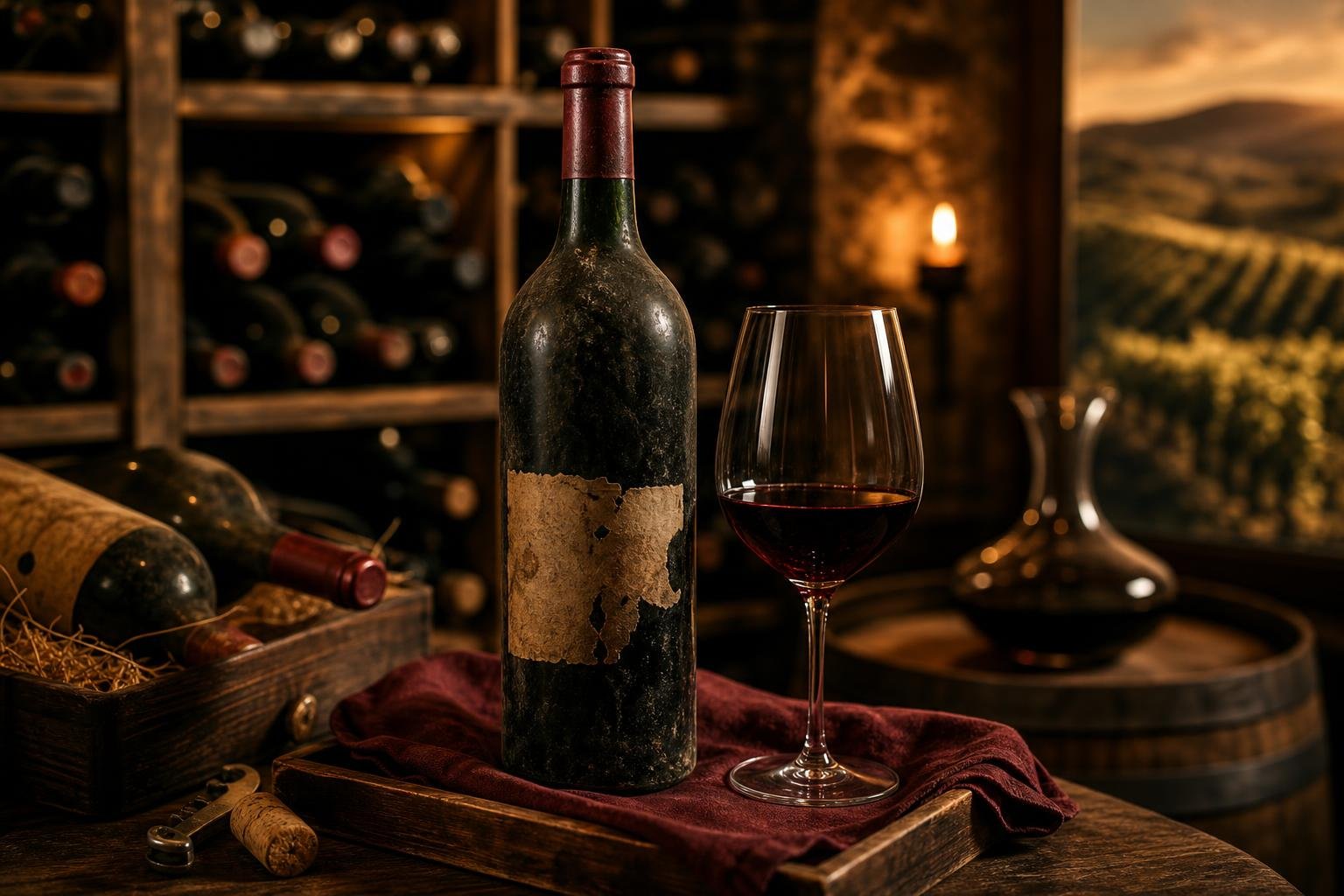
A lower fill may indicate evaporation or seal failure, although some gradual loss is expected in very old bottles. Raised or protruding corks can suggest heat exposure. Sticky capsules or stained labels may indicate seepage. Heavy sediment is not automatically a defect; it is normal in many mature, minimally filtered red wines and vintage ports.
Do not wash labels, polish capsules, replace tissue, or scrape away cellar dust. Gentle dry handling is sufficient. Aggressive cleaning can damage fragile paper and remove evidence of long-term storage.
Document Provenance
Provenance is the documented history of ownership and storage. Search for purchase invoices, auction catalogues, merchant correspondence, cellar books, insurance schedules, and professional storage statements. Interview relatives while memories are available: who bought the wine, where it came from, and whether it was moved or exposed to heat?
An unbroken chain of reputable purchase and storage records can increase buyer confidence, especially for rare bottles vulnerable to counterfeiting. Original wooden cases are useful, but a case alone does not authenticate its contents. Photograph serial numbers, branded corks visible through damaged capsules, and anti-counterfeit features without dismantling the bottle.
Estimate Value Conservatively
Separate replacement value from likely resale value. Retail listings show what a merchant hopes to receive, not necessarily what an owner will net. Auction results are more relevant, but seller commissions, taxes, shipping, storage, condition, and market location can substantially reduce proceeds.
Old wine is not inherently valuable. Collectors generally pay for a combination of celebrated producer, desirable vintage, rarity, sound condition, and credible provenance. Lesser wines may have more sentimental than commercial worth. For potentially important bottles, request opinions from several established auction houses, specialist merchants, or qualified appraisers. Legal rules governing alcohol sales and shipment vary by jurisdiction, so private owners should not assume they can sell or mail wine freely.
Create a Practical Action List
Once identification and condition checks are complete, divide the cellar into categories: keep, drink soon, professionally appraise, sell, gift, or inspect further. Prioritize leaking bottles, low fills, fragile labels, and mature wines that may be declining. Keep valuable bottles under suitable storage and update insurance documentation where appropriate.
The best inventory is not merely a price list. It preserves the collector's history while turning an intimidating room of bottles into an intelligible cellar. Work slowly, document everything, and let evidence—not label fame or bottle age—guide your decisions.