A convincing counterfeit wine label can mislead even an experienced collector. Fine-wine fraud is rarely exposed by one dramatic error; more often, suspicion grows from several small inconsistencies involving paper, printing, ageing and provenance. A label may also be genuine yet attached to a refilled bottle, so authentication must consider the entire package rather than the label in isolation.
Begin with the wine's documented identity
Before examining stains or typography, establish what the bottle should be. Confirm the producer, appellation, vintage, vineyard designation, bottle size and intended market. Compare these details with reliable producer records, established reference books and images of bottles whose provenance is secure. Label wording and legal declarations can change between vintages and export destinations, making a superficially different label legitimate.
Anachronisms deserve particular attention. A classification, company name, appellation term, alcohol statement or importer may not have existed in the claimed year. However, regulations differ by country and period, and some wines are labelled long after harvest. Treat an apparent historical error as a reason for further research, not immediate proof of fraud.
Inspect the paper and its ageing
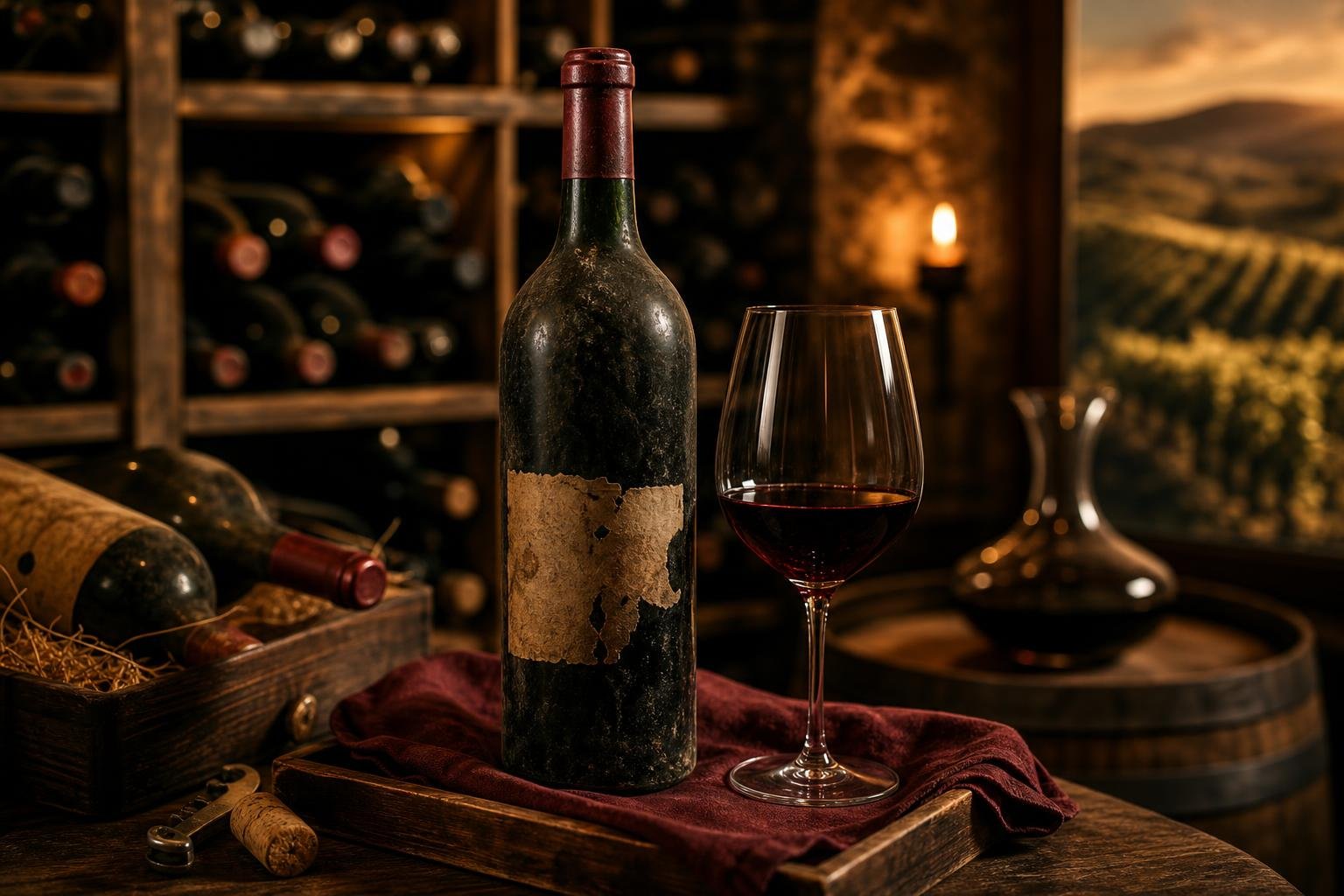
Authentic old paper generally ages unevenly. Its edges, exposed surface and areas beneath the capsule may show different tones. Uniform browning, theatrical stains or sharply defined dirt can indicate artificial ageing. Conversely, a clean label is not necessarily false: bottles stored in their original cases under cool, dry conditions can remain remarkably fresh.
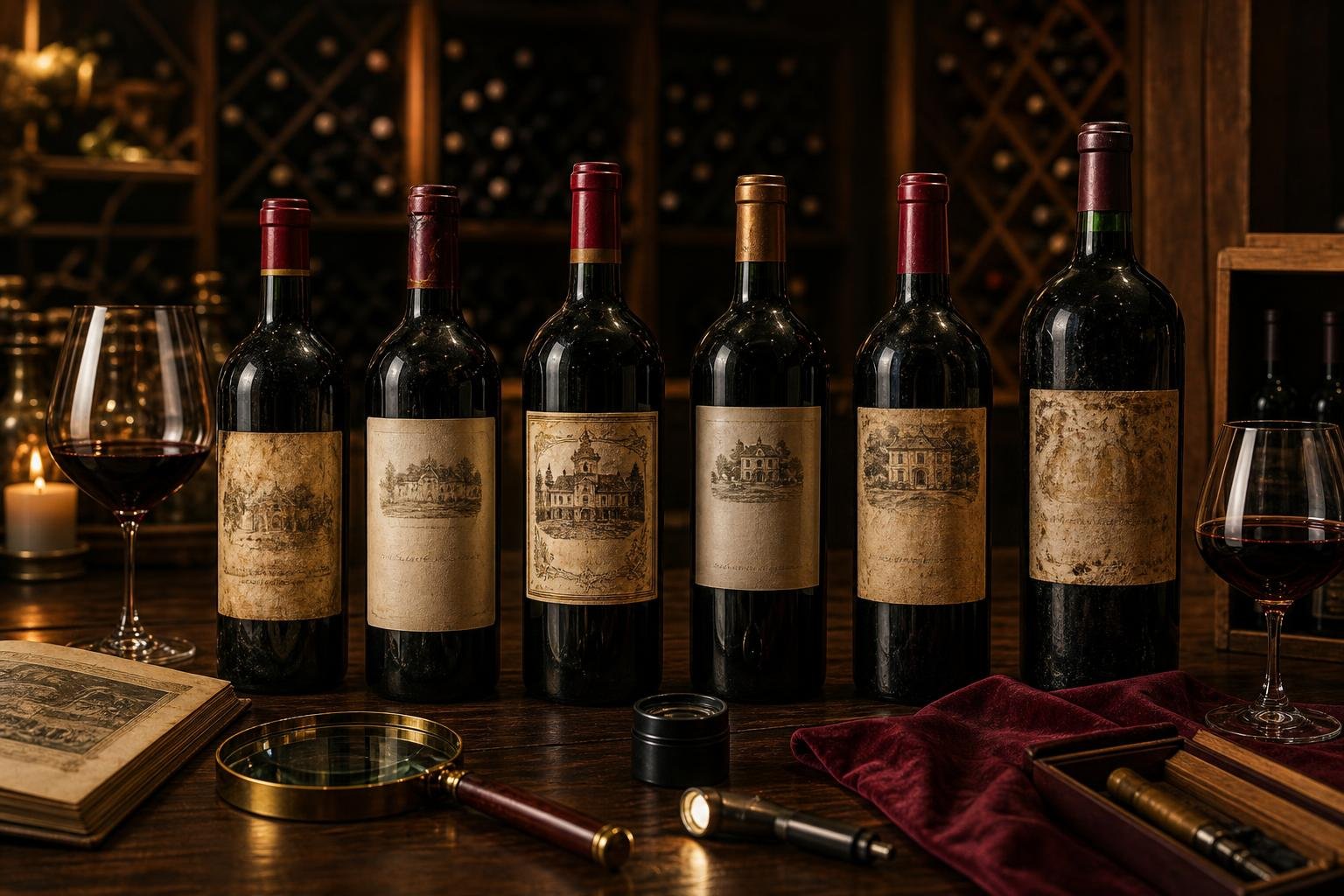
Under magnification, inspect the fibres, cuts and abrasions. A label supposedly applied many decades ago should not look like a modern digital print pasted onto artificially distressed stock. Ultraviolet examination can sometimes reveal optical brightening agents commonly found in modern papers and coatings. Strong fluorescence on a purportedly old label is a warning, although adhesives, restoration materials and later contamination can also fluoresce. UV findings therefore require expert interpretation.
Study the printing, type and fine detail
Counterfeiters frequently reproduce labels from photographs or scans. Enlargement may reveal blurred crests, broken rules, muddy illustrations, pixel-like edges or letters that lack the crisp character of the expected printing method. Look closely at accents, punctuation, spacing and alignment. Fraudulent labels sometimes combine a plausible typeface with modern kerning or reproduce a printing defect from the single bottle used as a template.
Colour is informative but not decisive. Ink can fade through light exposure, moisture and storage conditions, while genuine labels from one vintage may have been printed in separate batches. The best comparison is not a random internet image but a verified bottle of the same wine, vintage, size and destination market.
A label should tell the same historical story as the glass, cork, capsule, fill level and chain of ownership.
Check whether label and bottle agree
Assess the bottle's shape, colour, seams, mould marks, embossing and base. Glass manufacture evolved over time, and producers sometimes used several suppliers, but obviously modern glass beneath an allegedly ancient label is problematic. Bottle formats can also vary by market and size, so consult a specialist before drawing conclusions from glass alone.
The label's wear should make physical sense. Scuffing may correspond with contact inside a wooden case, while damp cellar storage can cause rippling, mould or adhesive failure. Heavy label decay paired with a pristine capsule, perfect glass and unusually high fill can be inconsistent. Equally, recorking or château reconditioning may legitimately introduce a newer cork or capsule, provided the intervention is documented.
Examine the closure without damaging it
Inspect the capsule for corrosion, folds, printing and signs of removal. A stretched, cut or re-glued capsule can suggest that the bottle has been opened and refilled. Through the glass, where possible, compare the cork's branding and apparent age with the wine. Corks can be replaced during documented reconditioning, so a younger closure is not automatically fraudulent.
Ullage, the space between wine and closure, normally increases gradually as a bottle ages. An exceptionally high fill in a very old bottle may invite questions, although storage, closure quality and recorking affect fill level. Sediment is similarly inconclusive: genuine mature wine may develop it, but sediment alone cannot authenticate the contents.
Demand credible provenance
Provenance is often more persuasive than cosmetic perfection. Ask for purchase invoices, cellar inventories, auction records, storage history and details of previous owners. A long list of auction appearances is not necessarily a secure chain of custody; it may merely show that the same questionable bottle has circulated repeatedly. Be cautious when a seller offers multiple supposedly rare bottles with weak documentation or implausibly similar condition.
The case of Rudy Kurniawan, convicted of wine fraud in the United States in 2013, demonstrated that counterfeiters may use genuine empty bottles and fabricate labels for prestigious wines. It also showed why rarity matters: bottles claiming to be from tiny or nonexistent production runs can sometimes be challenged through historical production records.
Use technology and professional expertise
Some recent releases carry serial numbers, tamper-evident seals, QR codes, NFC chips or other authentication features. Verify them through the producer's official channel rather than a website reached only through the bottle's code. For valuable purchases, consult the winery, an auction specialist or an independent authenticator. Laboratory analysis may help assess paper, ink, glass or wine chemistry, but such testing is specialist work and may not provide a simple verdict.
Trust consistency, not a single clue
The strongest authentication decisions arise when every element agrees: historical facts, paper, print, bottle, closure, wine level and provenance. One irregularity may have an innocent explanation; several independent contradictions form a compelling warning. When the evidence remains uncertain, the prudent collector should decline the bottle. In fine wine, missing an opportunity is far less costly than acquiring a beautifully presented fiction.