Shipping wine is more complicated than mailing an ordinary glass bottle. Wine is fragile, sensitive to temperature and regulated as alcohol, so safe delivery begins well before a box reaches the packing table. Whether you are sending a gift, moving a cellar or arranging delivery from a winery, the essential principles are the same: confirm that the shipment is legal, use an authorized carrier, choose purpose-built packaging and avoid dangerous weather.
Check the law before packing
Alcohol-shipping rules depend on where the package begins, where it ends and who is sending it. In the United States, states control much of the direct-to-consumer wine trade, and their licensing, volume, reporting and tax requirements differ. A winery or licensed retailer may be able to ship to a destination where an unlicensed individual cannot.
The United States Postal Service prohibits mailing intoxicating liquor. Private carriers such as UPS and FedEx accept wine only from eligible, approved shippers operating under carrier agreements; their services generally require compliant labeling and an adult signature. A private collector should not assume that declaring the contents makes a shipment permissible. For a cellar move, consult a licensed wine retailer, specialist logistics company or household mover experienced in transporting alcohol.
The safest wine shipment is not merely well packed; it is lawful, traceable and handled by people who know what is inside.
Select a carrier-approved wine box
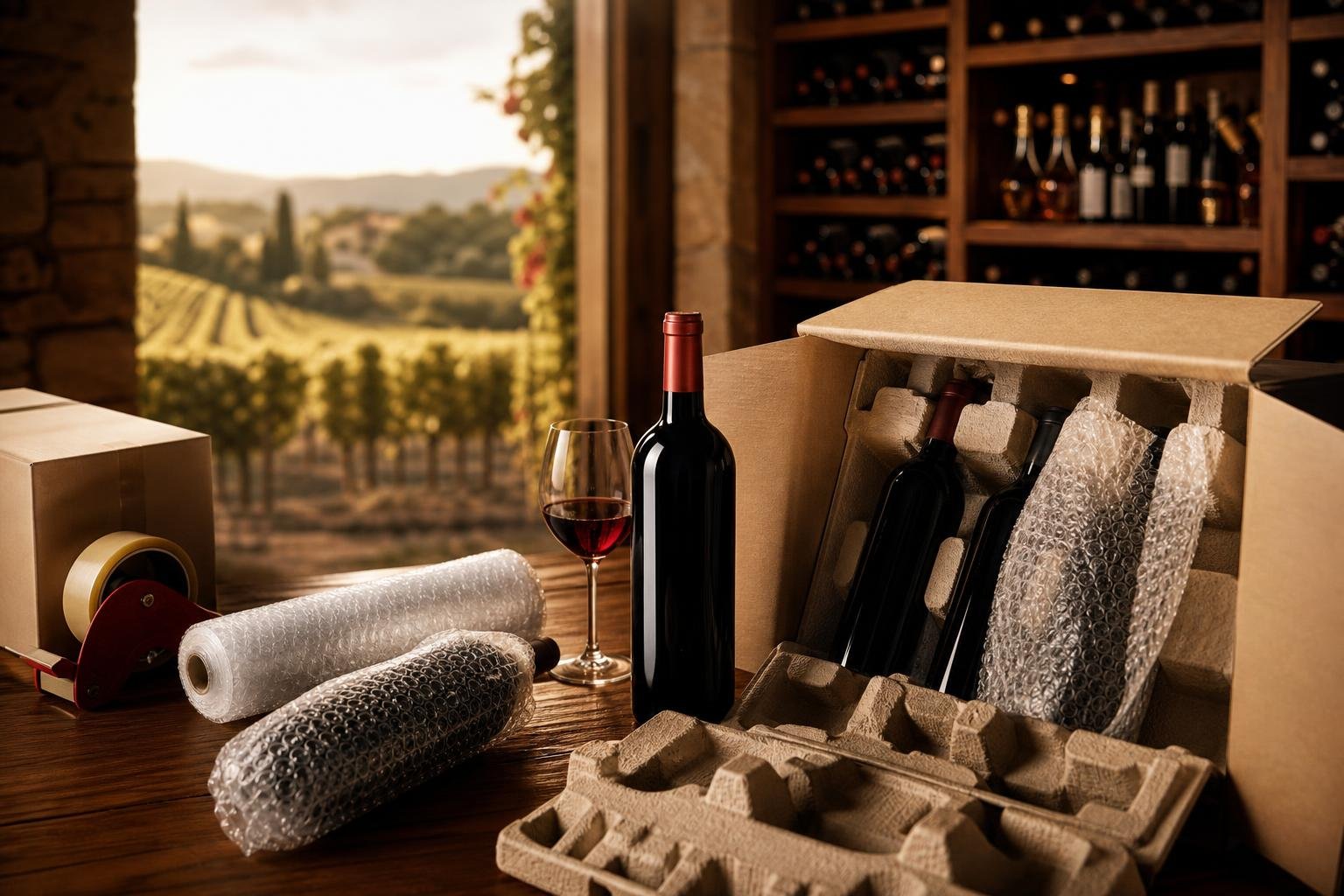
A standard cardboard box filled with loose newspaper is inadequate. Bottles are heavy, and their shoulders, bases and necks create concentrated pressure points. Use packaging designed and tested for wine, such as molded pulp trays, expanded-foam inserts, structured corrugated cells or certified inflatable sleeves. The insert should immobilize each bottle and prevent glass-to-glass contact.
Inspect reused packaging carefully. Corrugated board loses strength after crushing or exposure to moisture, while foam can crack around the bottle neck. Seal the outer carton with strong packing tape across every opening. For valuable bottles, a double-box system adds protection, but only if cushioning separates the inner and outer cartons on all sides. Follow the carrier's current packaging standard because approval requirements can change.
Prepare every bottle for transit
Examine bottles for raised corks, seepage, hairline cracks and weakened capsules. The capsule is decorative protection, not a liquid-tight seal. Place each sound bottle in a sealed plastic bag before fitting it into the insert; this will not prevent breakage, but it can contain liquid and protect neighboring labels if a closure leaks.
Bottles are generally shipped upright. This reduces prolonged pressure against the closure and limits leakage if a cork or screw cap loosens. A few days upright will not harm a cork-finished wine. Pack unusually shaped bottles separately when necessary: Burgundy, Champagne and heavy luxury bottles may not fit inserts designed around the narrower Bordeaux form.
Treat temperature as seriously as breakage
Heat is one of the greatest risks to wine in transit. Sustained high temperatures accelerate chemical reactions, diminish freshness and can cause the liquid to expand, forcing wine past the cork or pushing the cork upward. Freezing is also dangerous because wine expands as it freezes, potentially compromising the closure or cracking the bottle. Alcohol lowers wine's freezing point below that of water, but the exact temperature varies with alcohol and dissolved compounds.
Check conditions across the entire route, not only at the destination. A mild day at home may conceal a hot sorting hub or a freezing overnight warehouse. Insulated shippers slow temperature change but do not create refrigeration. Cold packs can help in limited circumstances, although they should never touch the bottle directly, and their effective life is finite. For rare or mature wine, temperature-controlled logistics are the better investment.
Choose timing and service carefully
Ship early in the week to reduce the chance of a box sitting in a depot over the weekend. Faster service shortens exposure to vibration and temperature swings, although it cannot guarantee climate control. Avoid major holidays, heat waves and severe freezes. Ask the recipient to expect the delivery, since adult-signature rules often prevent a package from being left unattended.
Delivery to an authorized business address or carrier-approved pickup location may be more reliable than repeated residential attempts. Track the parcel actively. If a delay occurs during extreme weather, contact the carrier rather than waiting for the tracking page to resolve itself.
Understand insurance and declared value
Carrier liability, declared value and independent insurance are not always equivalent. Before shipping collectible wine, read the coverage terms, exclusions and documentation requirements. Keep purchase receipts, auction invoices, photographs of bottle condition and images of the completed packaging. Some policies exclude leakage, temperature damage, improper packing or alcohol shipments that do not comply with applicable law.
Take extra care with international shipments
Cross-border wine delivery can involve import permits, duties, excise taxes, customs declarations and destination-specific labeling rules. Some countries restrict private alcohol imports or impose quantity limits. An inaccurate declaration may lead to delays, return or seizure. Use a licensed international wine merchant or specialist broker that can confirm the rules and calculate the landed cost before dispatch.
Inspect wine after arrival
Open the carton promptly and look for damp packaging, cracked glass, pushed corks or fresh seepage. If bottles arrive unusually warm or cold, let them return gradually to cellar temperature. After a routine journey, allowing the wine to rest is sensible, particularly when sediment has been disturbed, though there is no universal scientific timetable for so-called travel shock.
Ultimately, safe wine shipping is an exercise in risk management. Legal compliance comes first; sturdy fitted packaging, moderate weather, short transit times and attentive tracking follow. For an irreplaceable bottle, professional wine logistics may cost more, but that premium is modest beside the value of a treasured vintage arriving intact.