A strong wine listing does more than make a bottle sound appealing. It allows a buyer to identify the wine, assess its condition, understand its history, and decide whether the asking price is reasonable. Accuracy is especially important with mature or collectible bottles, for which storage, fill level, label condition, and provenance may matter as much as the producer or vintage.
The best wine description separates what can be verified from what is merely expected, remembered, or hoped for.
Begin with the Bottle’s Verifiable Identity
Start with the producer, wine name, appellation or region, vintage, classification where relevant, and bottle size. A useful title might read: “Château Léoville Barton 2005, Saint-Julien, 750 mL.” Vintage refers to the year in which the grapes were harvested, not the year of bottling or release. If the label says non-vintage, do not assign a year based on a purchase receipt or packaging code.
Transcribe names and classifications exactly. Terms such as Premier Cru, Gran Reserva, Grosses Gewächs, and Riserva have specific meanings within their respective regulatory systems and should not be added casually. Likewise, an appellation is not always a grape variety. Red Burgundy, for example, is generally associated with Pinot Noir, but a seller should describe what the label establishes rather than treating regional convention as proof of a bottle’s contents.
Record Objective Details Before Writing Tasting Copy
List the stated alcohol by volume, bottle volume, country of origin, importer, bottler, and lot or serial information when visible and relevant. Bottle size must be exact: a 1.5-litre magnum is not simply a “large bottle,” while half-bottles, jeroboams, and other formats can have market-specific names. Mention whether the bottle comes with its original wooden case, carton, tissue, booklet, or presentation box, but distinguish original packaging from later protective materials.
Use photographs and the physical label as primary references. Databases are helpful for checking spelling and context, but producers may release several cuvées with similar names. A technical sheet for another vintage may also describe a different blend, alcohol level, maturation regime, or vineyard source.
Describe Condition Without Euphemism
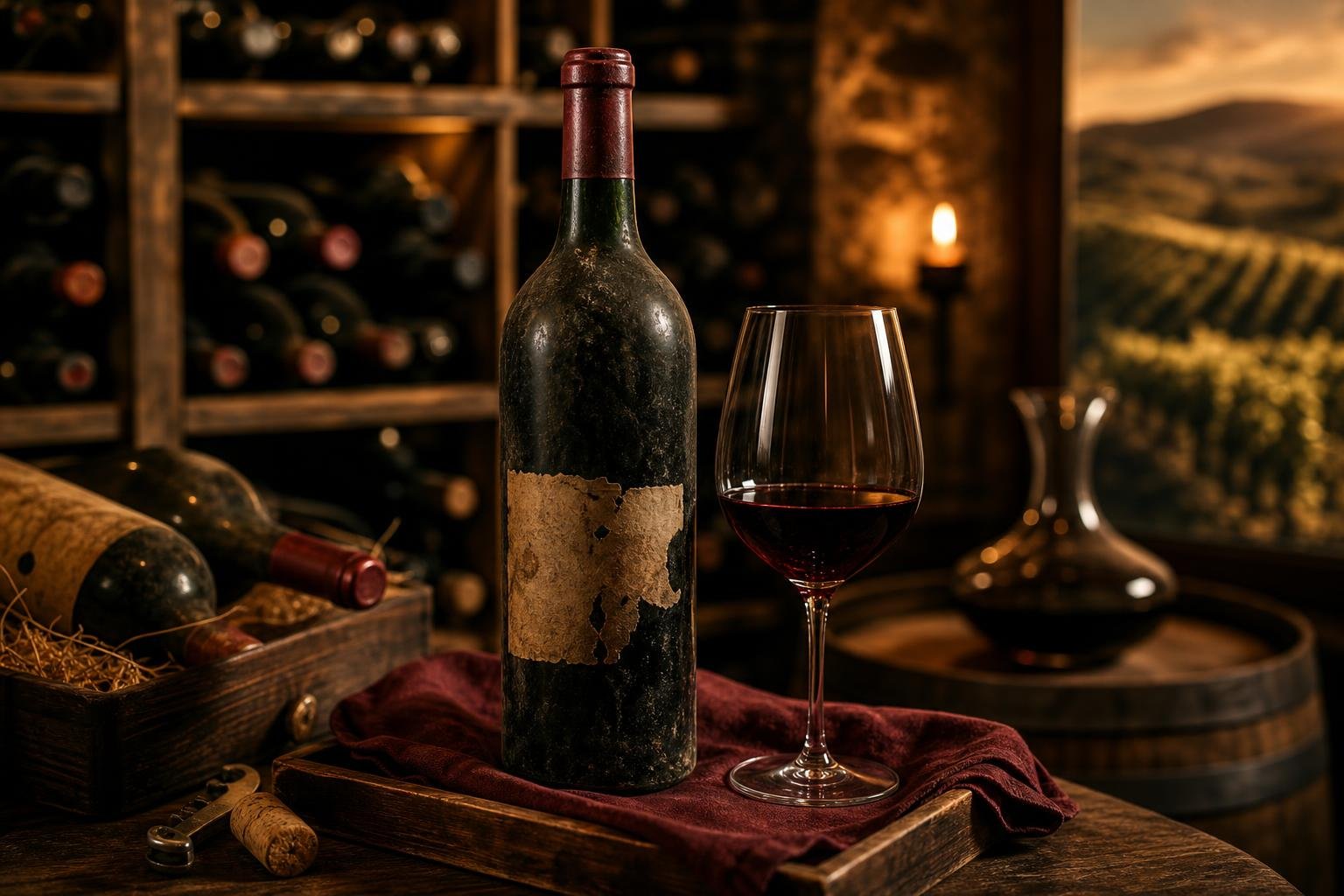
For older wine, report the fill level, label condition, capsule condition, and any signs of seepage. Useful observations include “fill into neck,” “top shoulder,” “lightly stained label,” “capsule nicked,” or “evidence of past seepage.” Fill terminology varies with bottle shape, so photographs or a measurement from the cork can be more informative than an imprecise descriptor.
A low fill may indicate evaporation or a compromised closure, although it does not by itself prove that a wine is spoiled. Conversely, an attractive label does not guarantee sound contents. Avoid words such as “pristine,” “perfect,” or “flawless” unless they can genuinely be supported. State whether the bottle has been opened, recorked, reconditioned, re-labelled, or inspected by a producer or specialist, if known.
Explain Provenance Carefully
Provenance means the documented chain of ownership and storage, not simply the seller’s confidence in a bottle. Specify when and where it was purchased, how long it has been held, and whether receipts, auction records, cellar inventories, or original cases are available. If storage temperature and humidity were monitored, provide the recorded range. If they were not, write “stored in a residential cellar” rather than inventing precision.
Statements such as “one owner since release” or “purchased on release” should be made only when evidence supports them. For collectible wine, an incomplete history is not necessarily disqualifying, but it should be disclosed plainly.
Keep Tasting Notes in Their Proper Place
A tasting note can help communicate style, but it should not masquerade as a guarantee. If the bottle being sold is unopened, describe the wine’s established profile using attributed sources or clearly qualified language. Mature Cabernet Sauvignon may develop cedar, tobacco, and dried-fruit aromas, for example, but no writer can confirm the condition of an individual sealed bottle through reputation alone.
When quoting a critic, name the publication or reviewer, the score, the date where available, and whether the note concerns the same vintage and bottle format. Do not present a barrel-sample score as though it were necessarily a later bottle review. Quoted text should remain exact and brief, with proper attribution.
Use Photographs as Evidence
Include sharp images of the front and back labels, capsule, closure area, fill level, bottle base, packaging, and every notable defect. Use neutral lighting and avoid filters that alter label colour or wine level. A photograph should supplement the written description, not excuse omissions. If glare hides a stain or tear, take another image.
A Practical Listing Structure
An effective description can follow a simple order: identity, bottle size, objective label data, provenance, storage, physical condition, packaging, tasting context, and sale terms. Finish with a direct disclosure such as: “Unopened bottle; top-shoulder fill; label lightly scuffed; capsule intact; storage before 2012 unknown.” That sentence is more useful than several paragraphs of romantic language.
In my view, accuracy sells fine wine better than extravagant prose. Collectors understand that old bottles vary and that cosmetic wear is normal. What undermines confidence is ambiguity. A precise listing respects the wine, protects the buyer from false assumptions, and gives the seller a more credible basis for discussing value.