Authenticating a valuable bottle begins with photography, but photographs alone rarely prove that a wine is genuine. They allow a specialist to compare labels, printing, glass, closures and packaging with verified examples. They can also reveal inconsistencies that justify further inspection. For collectors, auction buyers and restaurants purchasing mature wine, a disciplined image set is far more useful than a single attractive bottle shot.
Start With Full-Bottle Views
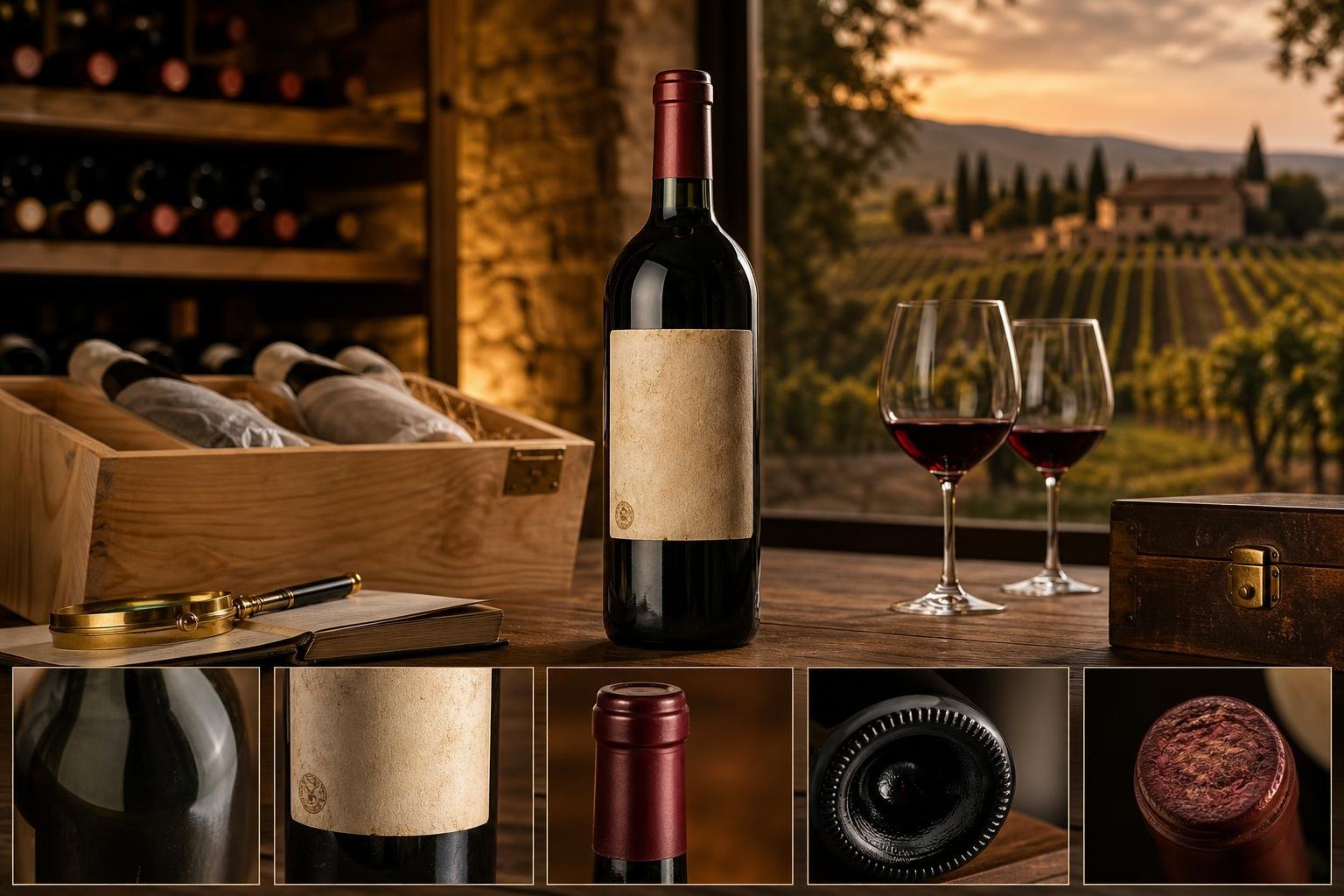
Photograph the bottle upright from the front and back, filling most of the frame without cropping the capsule, base or label edges. Add clear views of both sides. Use soft, neutral lighting and a plain background; flash glare can conceal paper texture, abrasions and subtle differences in ink.
These establishing images document the bottle’s proportions, shoulder shape, neck length, punt and label placement. Such features must be judged against the producer, region and period. Bottle molds changed over time, while wineries have sourced glass from different manufacturers, so shape is supporting evidence rather than proof by itself.
Capture Every Label in Close Detail
Provide straight-on, high-resolution photographs of the main label, vintage statement, neck label, back label and any importer strip. Include close-ups of typography, borders, coats of arms, signatures, embossing, serial numbers and damaged areas. A small ruler or color reference placed beside, but not over, the bottle can help establish scale and accurate color.
Experts examine printing technique, paper stock, spacing, alignment and the way a label has aged. Genuine old paper does not have one universal appearance: cellar humidity, storage angle, adhesives and handling all affect it. Artificial staining can imitate age, while a pristine label may be legitimate if the bottle was stored in an original wooden case. Condition must therefore be interpreted alongside provenance.
Back labels deserve particular attention. Importer names, alcohol statements, health warnings, appellation wording and recycling symbols can help establish the market and approximate release period. Regulations and export labels have changed, but requirements differ by country and date; a feature that is suspicious on one vintage may be entirely correct on another.
Photograph the Capsule and Closure
Take images of the capsule from the front, back, both sides and directly above. Show its color, material, seams, folds, embossing, printing and any evidence of cutting or re-crimping. Older bottles may carry lead, tin, aluminum, wax or plastic capsules depending on producer and era. Corrosion or cellar grime can be natural, but neither establishes authenticity.
The top view is especially useful because château names, logos and vintage marks may appear there. Photograph any tax strip, government seal or proprietary security device separately. If the bottle is unopened, do not remove the capsule or pull the cork merely to obtain evidence; doing so damages condition and commercial value.
Where the cork is visible through the glass, photograph it from several angles. Branding, vintage and cork length can sometimes be assessed, although distortion from curved glass limits certainty. A cork may also have been replaced during documented château recorking, meaning it must be considered with the service records rather than in isolation.
Record the Glass, Base and Fill Level
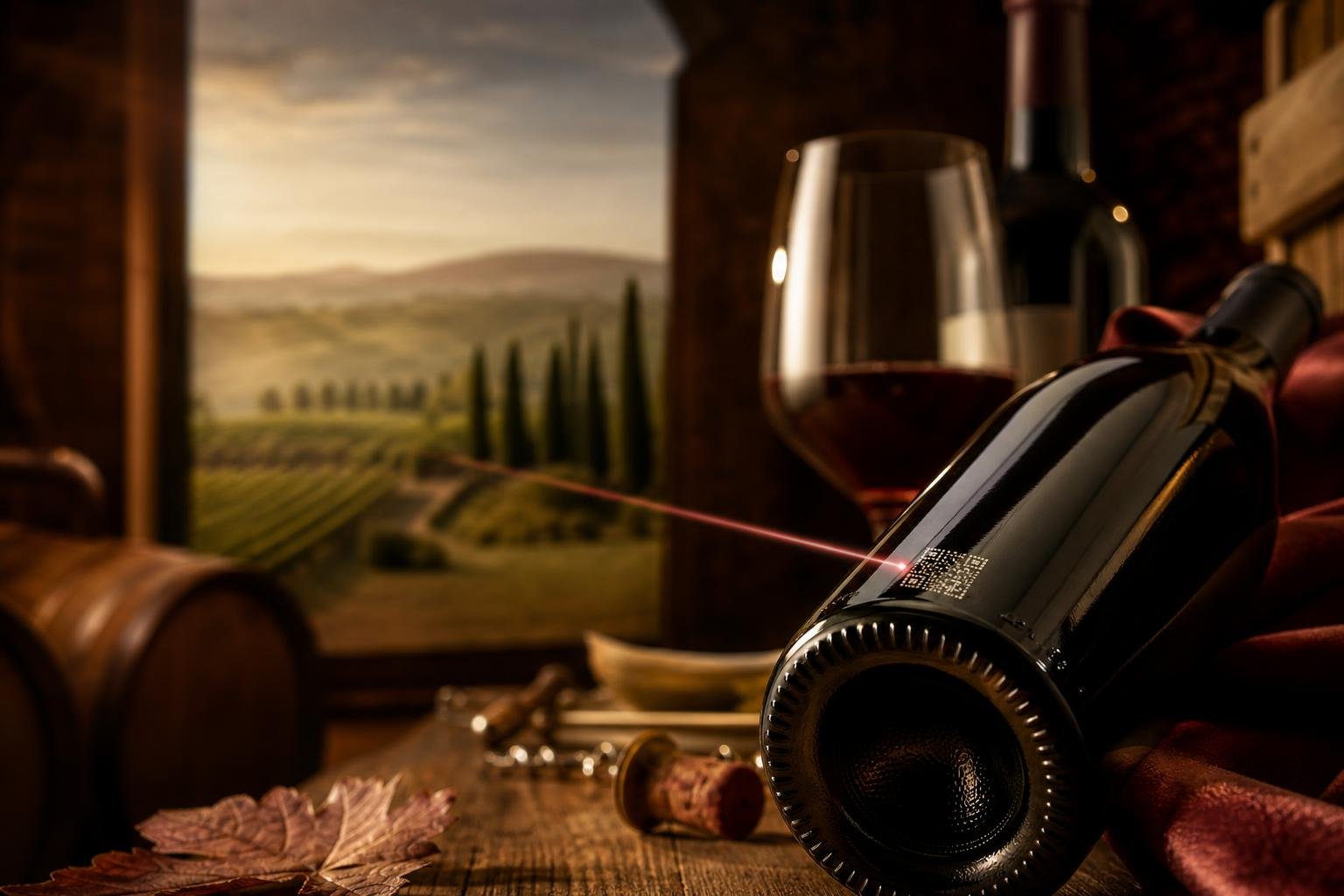
Photograph embossed lettering, mold marks, seams and any codes around the heel or base. Include one image looking directly into the punt and another showing the bottle against transmitted light. Some producers or glassmakers use identifying marks, but these vary by bottling and period. The absence of a mark is meaningful only when reliable reference bottles are known to carry it.
A well-lit side image should show the fill level and, where the glass permits, the wine’s color and clarity. For Bordeaux-shaped bottles, auction specialists commonly describe levels relative to the neck and shoulder; terminology differs for Burgundy and other bottle forms. Low fill can indicate evaporation or closure failure, but it does not automatically mean counterfeiting. Likewise, sediment is normal in many mature, unfiltered wines and is not proof of age.
Include Packaging and Provenance
Photograph the original wooden case, cardboard carton, tissue, dividers, stencils, branded nails, lot codes and case labels. Capture all sides and the interior. Packaging is often separated from bottles, however, and authentic cases can be reused, so bottle and case details must correspond.
Also photograph invoices, auction catalog entries, storage records, bonded-warehouse documents and recorking certificates, while redacting personal or financial information. A continuous ownership and storage history is often more persuasive than cosmetic perfection. Requesting original, uncropped image files can preserve metadata, although metadata can be altered and should never be treated as conclusive.
The best authentication photograph does not merely show that a bottle looks old; it supplies specific, comparable evidence about how and when it was made, sold and stored.
Use Specialized Images When Necessary
For costly or frequently counterfeited wines, specialists may request macro photographs, oblique lighting, ultraviolet examination or images of security features. These methods can reveal paper repairs, fluorescence differences, altered printing or disturbed capsules, but interpretation requires known genuine references and suitable equipment. UV response alone cannot reliably date a label.
What a Complete Photo Set Should Contain
A practical submission includes full front, back and side views; close-ups of every label; four capsule angles plus the top; visible cork markings; fill level; glass embossing; heel, base and punt; packaging; and provenance documents. Add photographs of stains, tears, seepage, cracks or irregularities rather than hiding them.
Finally, retain perspective. Professional authentication combines photography with documentary research, physical examination and comparison against producer or auction-house archives. When the value or risk is substantial, consult the winery, its official agent, a reputable auction specialist or an independent expert. Good photographs can eliminate doubtful bottles and support a sound opinion, but certainty comes from the total evidence, not one convincing image.