The Rudy Kurniawan case remains the defining scandal of the modern fine-wine market. Kurniawan infiltrated a wealthy circle of collectors, earned a reputation for an exceptional palate and sold supposedly rare bottles for enormous sums. Yet many of those wines were not merely misidentified or poorly stored. They were counterfeits assembled to imitate some of Burgundy’s most coveted vintages. His rise and conviction revealed how prestige, trust and inadequate scrutiny could overwhelm evidence in a booming market.
Who was Rudy Kurniawan?
Kurniawan was born Zhen Wang Huang in Indonesia and entered the United States on a student visa in the 1990s. After overstaying that visa, he nevertheless established himself in the Los Angeles wine scene. He spent lavishly, hosted generous tastings and appeared to possess an extraordinary memory for flavors and vintages. Fellow collectors called him Dr. Conti, a reference to Domaine de la Romanée-Conti, Burgundy’s most famous estate.
His social performance mattered. Fine wine is often tasted in groups where reputation shapes expectations, and Kurniawan poured genuine treasures alongside questionable bottles. By demonstrating knowledge and generosity, he accumulated credibility. Auction houses accepted major consignments from him; in 2006, wines associated with his collection generated tens of millions of dollars at auction.
The impossible bottles that exposed the fraud
The case began to unravel publicly in 2008, when bottles attributed to Domaine Ponsot appeared in an Acker Merrall & Condit auction in New York. Several carried impossible dates. Most conspicuously, bottles labeled as Domaine Ponsot Clos Saint-Denis came from vintages before the domaine began producing that wine in 1982.
Laurent Ponsot, then the domaine’s proprietor, learned of the sale and traveled to New York. The suspect lots were withdrawn. This was more than a disagreement over condition or provenance: an estate cannot have bottled a wine it did not yet make. The episode supplied investigators and collectors with a clear chronological contradiction.
A rare bottle must be historically possible before it can be commercially desirable.
Inside the counterfeit operation
Federal agents arrested Kurniawan in March 2012 and searched his home in Arcadia, California. They found what prosecutors presented as a counterfeiting workshop: empty prestigious bottles, corks, capsules, labels, stamps and notes concerning wine blends. The physical evidence demonstrated how ordinary or less valuable wines could be repackaged as rarities.
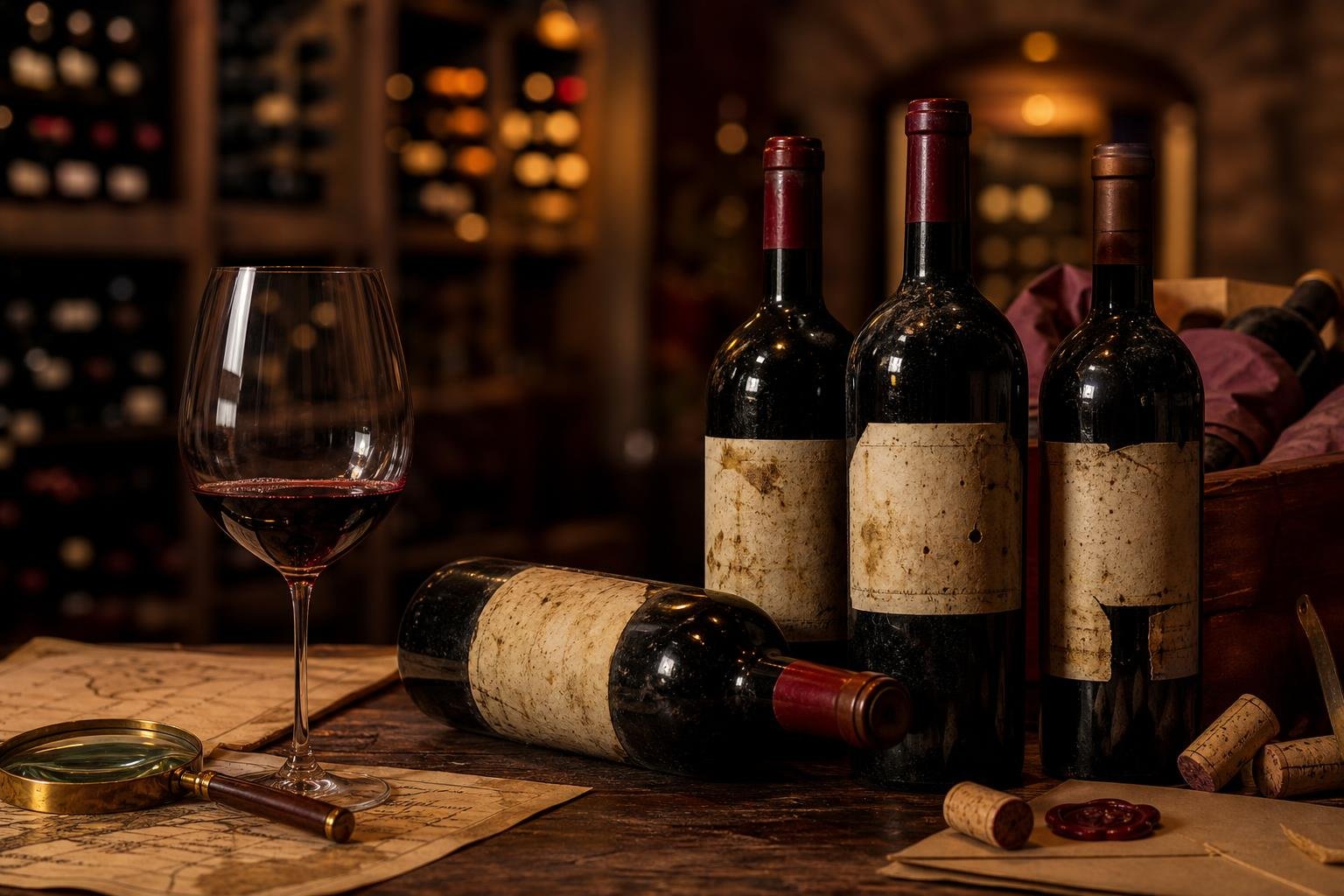
The operation exploited the importance collectors place on original containers. An authentic empty bottle has the correct glass, embossing and proportions, making it a useful shell for a fake. Labels can be artificially aged, corks altered and capsules replaced. The liquid may also be blended to suggest the expected profile of mature Burgundy. A convincing counterfeit does not need to taste exactly like the claimed wine; it needs to satisfy expectations long enough to avoid immediate suspicion.
The trial, conviction and sentence
In December 2013, a federal jury in Manhattan convicted Kurniawan of mail fraud and wire fraud. He became the first person convicted in a United States federal trial for counterfeiting wine. In 2014, he received a ten-year prison sentence and was ordered to pay approximately $28.4 million in restitution and forfeit $20 million in property.
After serving his sentence, Kurniawan was released from federal custody in 2020 and deported to Indonesia in 2021. The story also reached a wider audience through the 2016 documentary Sour Grapes, which examined both the deception and the rarefied collecting culture that enabled it.
Why experienced collectors were deceived
The scandal was not simply a triumph of label-making. It exposed structural weaknesses in the fine-wine trade. Old bottles frequently pass through several owners, and documentation may be incomplete. Famous wines are naturally scarce, yet the market’s rapid expansion created demand for quantities that should themselves have prompted skepticism.
There was also a psychological element. Buyers wanted access to legendary vintages, while auction houses benefited from spectacular consignments. Kurniawan’s tasting ability and social standing functioned as informal guarantees. Once accepted by influential collectors, he gained a network effect: each endorsement made the next transaction easier.
What the case changed
Serious buyers now place greater emphasis on provenance—the documented chain of ownership, storage and sale. Authentication may involve checking label typography, bottle shape, glass markings, capsule construction, cork branding and vintage-specific details. Estate records are crucial because vineyard ownership, bottling practices and cuvée names change over time. Scientific techniques can help, but historical research often catches the simplest errors.
The best defense is not a single test. It is agreement among the wine, packaging, paper trail and known history of the producer. Buyers should distrust unexplained abundance, especially when numerous supposedly ancient bottles emerge from one source. Independent expertise is also preferable to relying solely on a seller’s reputation.
A lasting lesson for the wine world
Kurniawan succeeded because he understood more than wine: he understood aspiration. The case demonstrated that connoisseurship without skepticism can become a liability. Fine wine depends on stories of place, vintage and continuity, but those stories must remain testable. A bottle’s romance should begin only after its history makes sense.