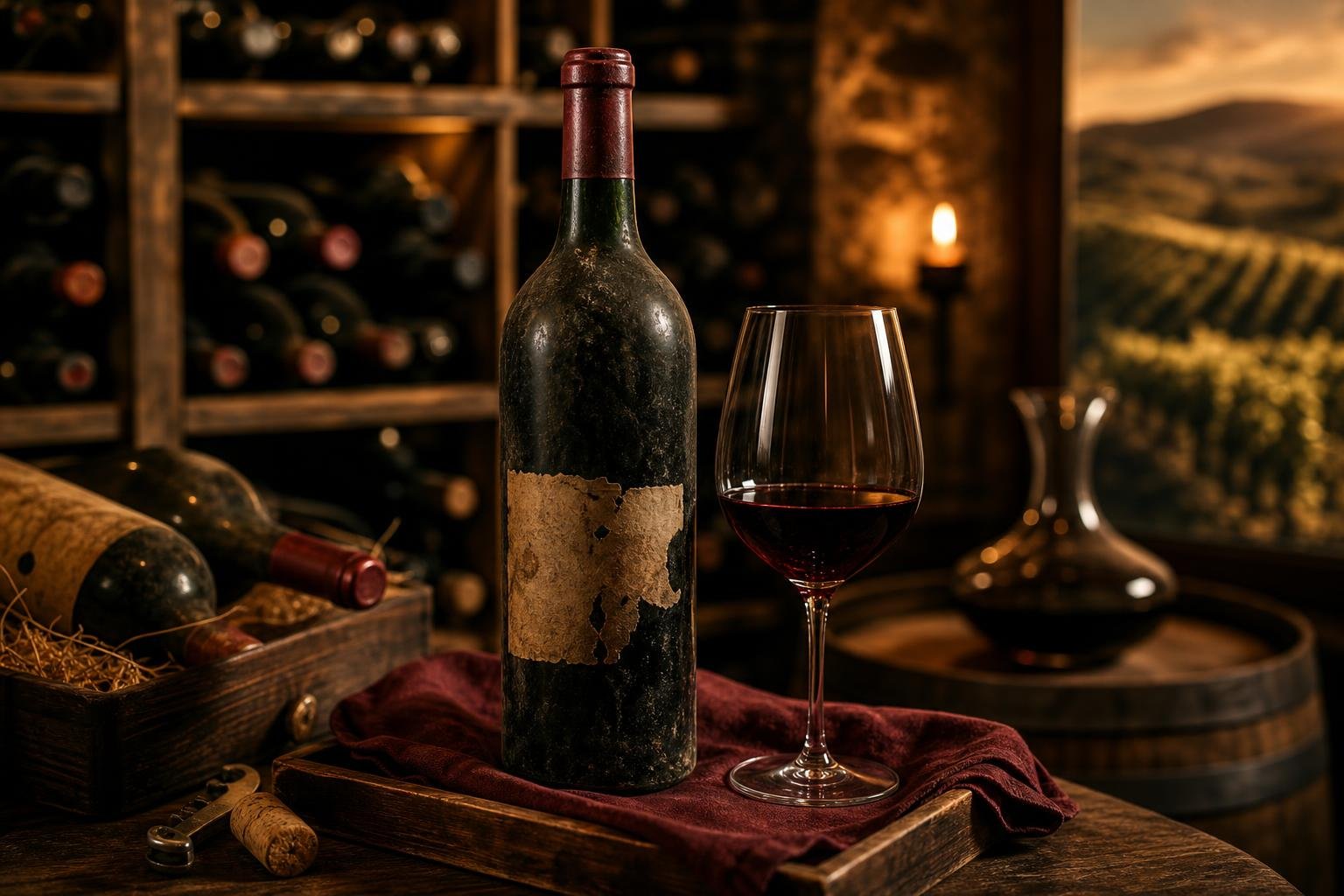
Few California wines carry the financial and cultural weight of Screaming Eagle. Its 2015 Cabernet Sauvignon arrived from a small Napa Valley vintage, earned exceptional reviews and quickly became a trophy bottle. Yet its desirability is not based on scarcity alone. Provenance, condition, critical reputation and the unusual strength of the Screaming Eagle brand all help determine what the wine is worth—and whether it deserves a place in a serious cellar.
A Cult Cabernet With a Short but Powerful History
Screaming Eagle is an Oakville estate whose first commercial release was the 1992 vintage. Founding winemaker Heidi Barrett transformed fruit from Jean Phillips's vineyard into one of Napa's defining cult Cabernets. The debut received extraordinary critical attention, and tightly controlled allocations created demand that production could not satisfy.
The estate changed ownership in 2006, when it was purchased by Stan Kroenke and Charles Banks; Kroenke later became the sole owner. Considerable investment followed in the vineyard and winery. Nick Gislason, who joined the estate in 2010, is associated with the modern era of precise, polished Screaming Eagle wines.
Screaming Eagle is collectible because three forms of scarcity converge: limited production, restricted direct allocations and remarkably few bottles with impeccable provenance reaching resale markets.
Why the 2015 Vintage Matters
The 2015 Napa Valley growing season was early and unusually small. Drought remained an important background condition, but reduced yields were also linked to cool, unsettled weather during flowering, which caused poor fruit set in some vineyards. A warm summer and early harvest produced concentrated grapes, although successful estates had to preserve freshness and avoid excessive ripeness.
At Screaming Eagle, the result was a Cabernet-led blend widely reported as 86% Cabernet Sauvignon, 9% Merlot and 5% Cabernet Franc. Production was approximately 600 cases, although figures for tightly held cult wines should always be treated as estimates. Leading critics awarded the wine perfect or near-perfect scores, reinforcing demand from collectors who follow both vintage reputation and critical consensus.
Character in the Glass
The 2015 is celebrated for combining richness with aromatic lift. Published tasting notes commonly describe cassis, black cherry, violet, graphite, spice and subtle earthy or mineral nuances. The texture is notably refined: concentrated without feeling heavy, supported by fine tannins and a long, composed finish.
This distinction matters. Napa collectors can find many powerful Cabernets, but Screaming Eagle's identity rests on perfume, proportion and texture rather than sheer mass. The 2015 has the density expected from a warm, low-yielding year, yet its balance gives it a credible path toward graceful development.
Market Value Versus Drinking Value
Contemporary reports placed the mailing-list release price at roughly $850 per 750-millilitre bottle. Secondary-market prices subsequently rose to several times that figure. Depending on provenance, format, tax and seller, clean bottles have commonly appeared at auction or retail in the low-to-mid four figures. Those figures are guides, not appraisals: asking prices can substantially exceed completed auction results.
Buyers should compare like with like. Auction estimates may exclude buyer's premiums, while retail prices may include a merchant's provenance guarantee or storage history. A bottle offered for $4,000 is not necessarily worth $4,000 if equivalent bottles repeatedly sell for less after all fees are considered.
As a pure drinking proposition, the value is difficult to defend. Excellent Oakville Cabernet is available for a fraction of the price. As a collectible luxury asset, however, Screaming Eagle occupies a different category. The buyer is paying for the wine, the label's status, restricted supply and access to one of Napa's most recognizable names.
What Supports Collectability?
The 2015 has several advantages: a small crop, elite reviews, a celebrated estate and a style capable of long aging. It also belongs to a globally traded brand with demand extending beyond American collectors. Large formats and original wooden cases may command additional premiums because they are scarcer and easier to authenticate as intact acquisitions.
Brand mythology also matters. In 2000, a six-litre bottle of the 1992 Screaming Eagle sold for $500,000 at the Napa Valley Wine Auction. That charitable result is not a legitimate market comparable, but it illustrates how firmly the estate entered wine culture.
Provenance Is the Deciding Factor
Condition can outweigh vintage quality when expensive wine changes hands. Buyers should seek evidence of professional storage, a sound fill level, an undamaged capsule and label, and a credible chain of ownership. Original mailing-list documentation or an unopened original case can be valuable. Bottles exposed to heat or repeated shipping deserve a meaningful discount, regardless of cosmetic appearance.
Counterfeit risk should also be considered whenever prices become substantial. Established auction houses and specialist merchants typically inspect bottles and document provenance, although no purchasing channel eliminates risk completely.
Drink, Hold or Sell?
At roughly a decade old, the 2015 should remain youthful when properly stored. Collectors who enjoy primary fruit and polished structure can drink it now after careful decanting. Those seeking tobacco, cedar and more developed savory complexity may prefer to wait. A drinking window extending well into the 2030s is reasonable, with excellent bottles potentially lasting longer.
For investors, the 2015 is best viewed as a blue-chip collectible rather than a guaranteed return. Transaction costs, storage fees and changing tastes can erode gains. For enthusiasts, its strongest case is simpler: it is a rare, highly regarded expression of modern Oakville Cabernet, provided the bottle's history is as convincing as the name on its label.