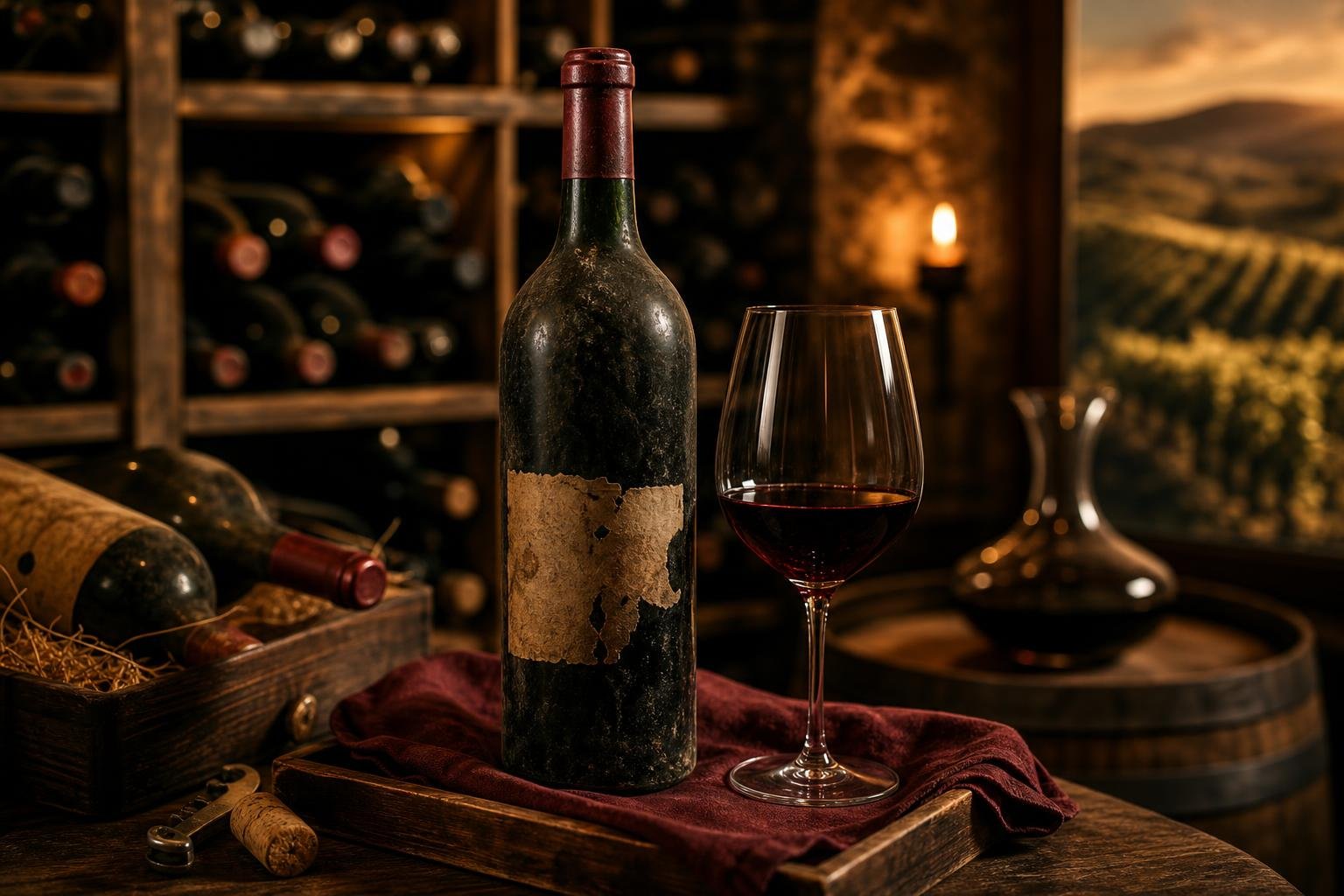
In the fine-wine market, provenance is the history of a bottle from its release to its present owner. It covers where the wine was purchased, how it was transported and stored, and whether its chain of custody can be documented. “Single-owner provenance” sounds especially reassuring, but the term deserves careful interpretation rather than automatic trust.
What Single-Owner Provenance Usually Means
At its simplest, single-owner provenance means that the wine comes from one private owner or one consigning collection. Ideally, that owner bought the bottles on release from the producer, an importer or an established merchant and kept them in the same professionally managed cellar. This short, traceable history reduces the number of unknown storage environments and transactions.
However, the description does not always mean that every bottle has remained with the same person since release. A collector may have assembled a cellar over decades using merchants, auctions and private purchases. An auction house may still describe the resulting consignment as a single-owner collection because one person is selling it. Definitions and catalog practices vary, so buyers should read the accompanying provenance statement.
Why the Chain of Custody Matters
Wine is sensitive to heat, light, vibration and sudden temperature changes. A bottle that has moved repeatedly between warehouses, retailers and private cellars has encountered more opportunities for poor handling. A single transfer does not damage wine, but every undocumented stage introduces uncertainty. Fewer owners can therefore make a bottle easier to assess.
Single ownership is valuable because it may simplify a wine’s history, not because ownership itself preserves wine.The distinction is important. One conscientious owner can maintain ideal conditions, while another can leave bottles in a warm apartment or fluctuating garage. Storage quality ultimately matters more than the number of names in the ownership record.
What Good Documentation Looks Like
Strong provenance may be supported by original invoices, merchant records, warehouse statements, insurance inventories and correspondence concerning delivery. Cases that retain their original wooden packaging, internal dividers or import labels can provide additional context, although packaging alone is not proof of authenticity.
For younger wines, digital purchase histories and bonded-warehouse records may create a particularly clear trail. Bonded storage is useful because wine can remain under controlled conditions without entering ordinary retail circulation. For older bottles, complete paperwork is less common, so specialists also consider the cellar itself, the owner’s buying habits and the consistency of the collection.
Condition Still Has to Match the Story
A compelling history should be compared with the physical bottle. Specialists inspect fill level, capsule, cork position, label, glass, sediment and signs of seepage. With mature wine, some evaporation is normal, and acceptable fill varies with age and bottle shape. An unusually low level may suggest cork failure or poor storage, while a raised cork or stained capsule can indicate heat exposure or leakage.
None of these clues is conclusive in isolation. Old labels can become damp or marked in a sound cellar, while pristine labels do not guarantee that the wine was stored well. The most persuasive offering combines a credible narrative, documentation and bottle condition that all point in the same direction.
How Auction Language Can Be Misread
A “single-owner sale” may refer to the structure of an auction rather than the complete history of each lot. Likewise, phrases such as “from an important private cellar” or “property of a distinguished collector” can describe the consignor without establishing original ownership. Reputable specialists normally add details such as where the wines were purchased, how long they were held and whether they were stored professionally.
Buyers should also distinguish between provenance and authenticity. A bottle can come from one cellar yet still have been acquired from an unreliable source. Conversely, a genuine bottle with several documented owners may be an excellent purchase. Provenance supports an authenticity assessment; it does not replace expert examination.
Does Single-Owner Provenance Increase Value?
It can. For rare Bordeaux, Burgundy, Champagne and other collectible wines, buyers often pay more for bottles with direct, well-documented histories. The premium may be especially meaningful when counterfeiting risk is high or when mature wines are physically fragile. Complete original cases with consistent fills and labels can also inspire stronger bidding than mixed bottles of uncertain origin.
Still, the phrase should not outweigh the fundamentals: producer, vintage, format, condition and storage. A weak vintage does not become great because one person owned it, and a heat-damaged bottle is not rescued by an impressive invoice. In my view, detailed storage records are more valuable than an elegant but vague ownership story.
Questions a Buyer Should Ask
Ask when and where the wine was acquired, whether it was purchased on release, and whether any bottles came from the secondary market. Request information about cellar temperature, professional storage and transportation to the sale. For expensive bottles, ask for high-resolution photographs and condition reports covering fill, capsule, cork and signs of seepage.
Also check whether the seller guarantees authenticity and how disputes are handled. Auction estimates do not constitute guarantees, and buyer’s premiums, taxes, shipping and insurance can materially increase the final cost.
The Practical Meaning
Single-owner provenance is best understood as a promising starting point. It can indicate a shorter, more coherent chain of custody and may reduce uncertainty, but it is not a certification of quality or authenticity. The strongest bottles bring together traceable acquisition, stable storage, convincing physical condition and transparent selling terms. When those elements agree, provenance becomes more than marketing language: it becomes useful evidence.