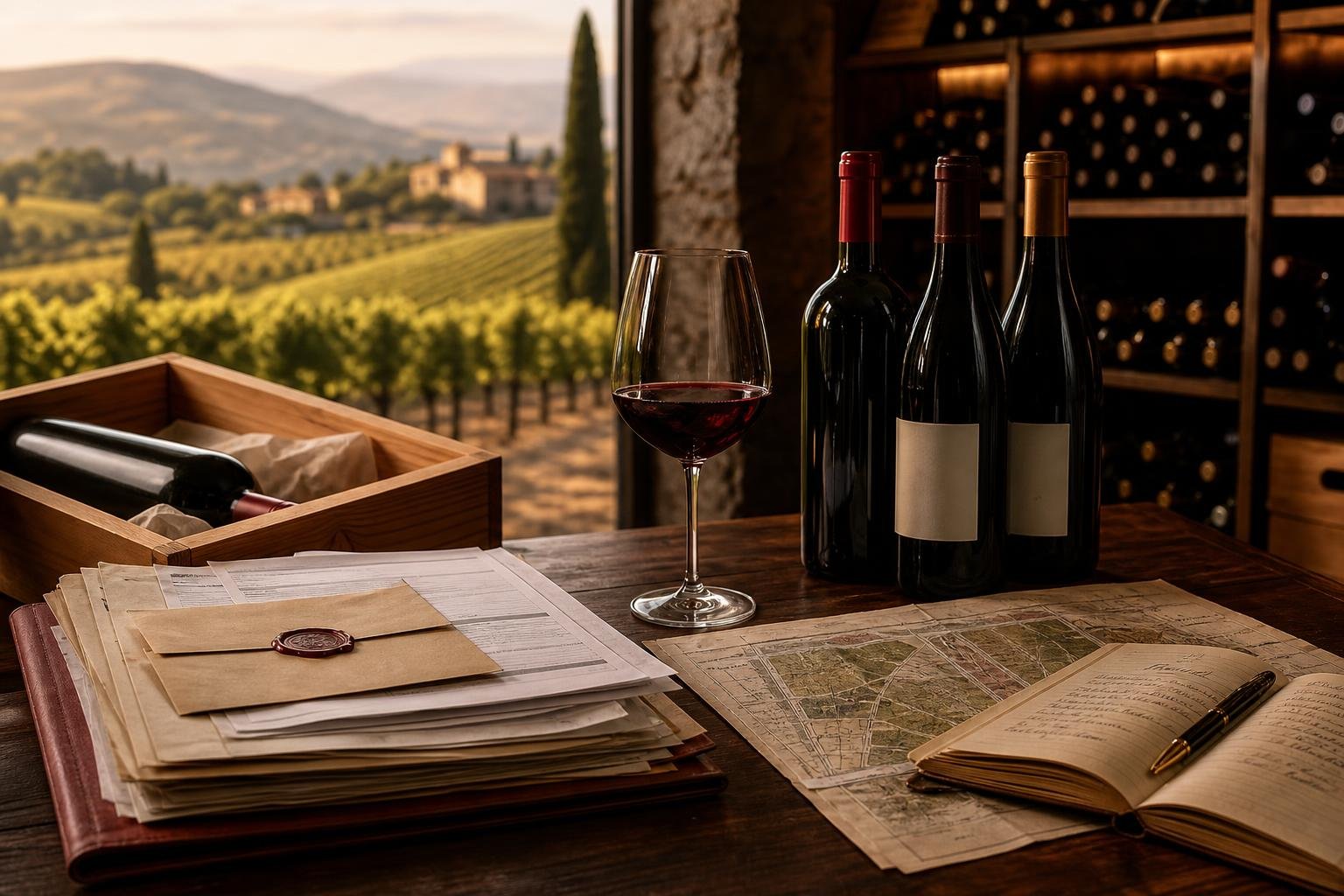
For fine wine, provenance is not decorative paperwork. It is the documented history of a bottle from release to sale, ideally covering ownership, storage and transport. Strong provenance can increase confidence and value, particularly for rare Burgundy, Bordeaux, Champagne and other wines vulnerable to counterfeiting or poor storage. Yet no single document proves everything. The best evidence is a consistent chain of independent, verifiable records.
What provenance must establish
A convincing file should answer four questions: Where was the wine acquired? Who owned or controlled it? How was it stored? How did it reach the present seller? Authenticity and condition are related but distinct. A genuine bottle can be ruined by heat, while a counterfeit may be accompanied by an impressive-looking invoice. Documents therefore need to agree with the physical bottle and with one another.
Provenance is strongest when separate records tell the same uninterrupted story.Original purchase invoices
An original invoice from a producer, château, domaine, established merchant or recognized importer is often the foundation. It should identify the buyer and seller, transaction date, wine, vintage, bottle size, quantity and price. Useful invoices may also show an order number, tax details or delivery address that can be checked against business records.
An invoice proves that a transaction was recorded; it does not automatically prove that the bottle now offered is one of those originally purchased. Generic descriptions such as assorted wine are weak evidence, as are editable files without contact details. For expensive bottles, ask whether the merchant can confirm the invoice independently, subject to privacy and record-retention limits.
Cellar inventories and ownership records
Dated cellar inventories, insurance schedules, estate records and professional valuation reports can help bridge gaps between purchase and resale. Their value rises when they identify individual bottles, formats or case numbers and appear consistently over many years. Probate documents may establish lawful transfer from a deceased collector, although they rarely demonstrate ideal storage by themselves.
Handwritten cellar books can also be meaningful, especially when entries correspond with invoices and withdrawals. They should be treated as supporting evidence rather than unquestionable proof because private records are easy to amend or reconstruct.
Storage and bonded-warehouse records
Professional storage statements are among the most useful documents for assessing custody. They may show receipt dates, account ownership, case descriptions, withdrawals and transfers. In markets using bonded warehouses, records can demonstrate that wine remained under customs control with applicable duties or taxes suspended. Bonded status is not an authenticity guarantee, but an uninterrupted warehouse trail can reduce opportunities for substitution and undocumented handling.
Temperature and humidity logs add context when they are specific to the facility and relevant period. A marketing claim that a cellar is climate controlled carries less weight than dated monitoring records. Even excellent warehouse paperwork cannot describe conditions before the wine entered storage.
Shipping, customs and import documents
Bills of lading, air waybills, delivery receipts, customs declarations and importer invoices can connect a wine to a particular route. These records are especially important when bottles cross borders or move from a producer to an authorized importer. Depending on the jurisdiction, labels may also identify the importer responsible for bringing the wine into the market.
Shipping documents should be examined for dates, quantities, consignors and consignees. They generally document cargo rather than certify each bottle's authenticity. Evidence of refrigerated or temperature-controlled transport is useful, whereas a long summer journey without such protection may raise condition concerns.
Producer, merchant and auction records
Producer allocations, release confirmations and correspondence can support a direct-purchase claim. However, collectors should be cautious about supposed certificates of authenticity: many prestigious wineries do not routinely issue bottle-specific certificates for ordinary releases.
Past auction catalogues, condition reports and settlement statements can establish earlier possession and public sale history. A reputable auction listing is valuable supporting evidence, not infallible proof. Catalogues often rely partly on information supplied by consignors, and standards vary among houses and periods.
Photographs and physical identifiers
Dated photographs can connect documents to a bottle when they clearly show the label, capsule, fill level, glass markings and any serial or case identifiers. Original image files with metadata are preferable to screenshots, though metadata can be altered. Photographs become persuasive when distinctive stains, tears or wear remain consistent over time.
The physical examination still matters. Paper, printing, capsule construction, cork branding, bottle shape and fill level should be appropriate for the producer and era. A suspicious bottle is not redeemed by paperwork, particularly when document dates conflict with known release timing or label details.
How to judge a provenance file
Start with the earliest credible record, then build a chronological timeline. Verify sellers, storage facilities and auction houses through independent contact details rather than those printed only on the submitted documents. Compare quantities, bottle sizes, case numbers and addresses at every transfer. Originals are preferable, but high-quality scans may be reasonable when their source can be confirmed.
Red flags include unexplained ownership gaps, mismatched vintages, recently created certificates, identical paperwork reused for several bottles, missing warehouse withdrawals and invoices from businesses that did not exist on the stated date. A story that is elaborate but unverifiable is weaker than a short, coherent trail from respected sources.
The practical verdict
No document alone conclusively proves wine provenance. The strongest case combines an original invoice, continuous storage or inventory records, documented transfers and a physical inspection consistent with the claimed history. For a costly or frequently counterfeited wine, professional authentication and direct verification are sensible. Good provenance is not merely a pile of paper; it is a chain that survives scrutiny.